date_range
Wednesday 28 Oct 2026


 LOCAL EDITION
close
 LOCAL EDITION


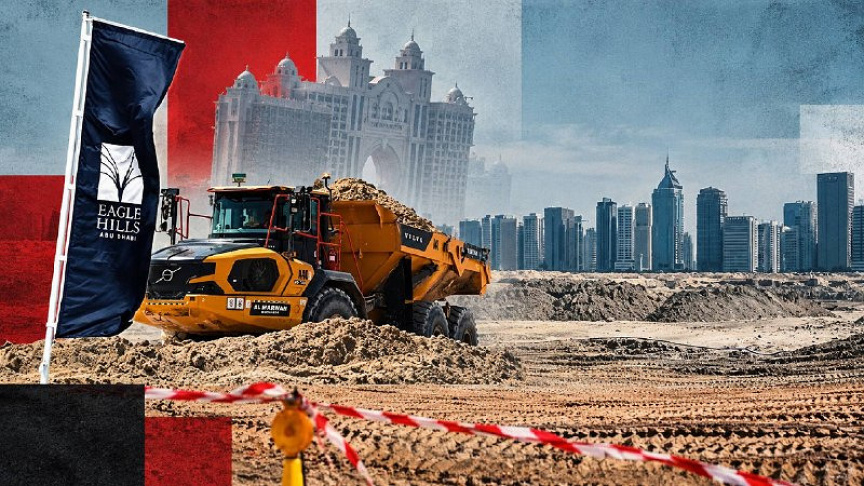
Eagle Hills is working on transforming Lulu Island into a multi-million-dollar destination.
Situated near the Abu Dhabi Corniche, within sight of the city's towering skyline, lies the expansive Lulu Island.
Reclaimed between 1986 and 1992, this 400-hectare landmass was not originally intended for large-scale development but was primarily envisioned as a breakwater to protect the coastline. For over 30 years, the island remained vacant and devoid of any significant infrastructure.

However, under Abu Dhabi’s 2030 Urban Framework, Lulu Island has emerged as a strategic cornerstone of the city’s future. Efforts to transform this site into a premier multi-million-dollar destination have now commenced, spearheaded by Eagle Hills. This is the same Abu Dhabi-based firm that signed an agreement with the Maldivian government last September to develop the Maldives Waterfront and Marina project at Rasmalé.
During a recent media delegation organized by Eagle Hills, I had the opportunity to observe the ongoing developmental progress on Lulu Island firsthand.
Lulu Island: A Mirror to the Maldivian Context
The history of Lulu Island bears striking similarities to the situation in the Maldives. Various administrations in the Maldives have reclaimed expansive land areas, yet many of these sites remain unproductive or fail to benefit the public directly. This is often due to the lack of capable developers willing to undertake such massive ventures or the financial constraints of the state.

Lulu Island has seen numerous proposals over the years. In 1981, the renowned Brazilian architect Oscar Niemeyer proposed a resort island concept, which was later shelved due to prohibitive costs. In the early 1990s, a plan to develop Lulu into a tourism resort was estimated at USD 2 billion. However, by 1997, the project was abandoned as projected costs doubled. Subsequently, in 2003, the Abu Dhabi government established a specialized corporation with 100 million Dirhams in capital to develop the island. Although later proposals included ambitious structures such as a 75-story tower, these projects were also deferred. With the original reclamation costs never publicly disclosed, the island remained a vast, barren landscape—until now.
While Eagle Hills has yet to reveal the total investment value for the Lulu project, a development of this magnitude is expected to inject billions of dollars into the economy, creating numerous jobs, housing opportunities, and commercial activities.

Rapid Progress on Site
Although Eagle Hills assumed responsibility for the project only about three months ago, work is progressing at a remarkable pace. Construction of villas has already commenced. To prepare for the official project launch, mockup villas and a dedicated sales center are currently being developed.
Furthermore, a bridge connecting Lulu Island to the main city of Abu Dhabi is under construction, with significant portions already completed as work continues around the clock.
The parallels between Lulu Island and Rasmalé are evident. Both are large reclaimed landmasses situated near their respective capital cities, and both rely heavily on a master developer to transform them into inhabited communities. The 4 million square meter area of Lulu Island is comparable in scale to the 5.2 million square meters being reclaimed for the Maldives Waterfront and Marina at Rasmalé.

The bridge at Lulu Island underscores the vital importance of connectivity. Similarly, the success of Rasmalé will depend significantly on its integration with Malé, Hulhumalé, and the international airport.
The transformation of Lulu Island demonstrates that when a capable company takes charge, signs of development emerge rapidly. Nevertheless, these are still the early stages. While the current momentum is promising, the ultimate success of the project will be measured by the sustained progress in the years to come.
The key lesson for the Maldives is that land reclamation is merely the initial step.
The true value of reclaimed land is determined by the actions that follow: meticulous planning, reliable financing, and the engagement of a developer with the proven capability to bring the vision to fruition.