date_range
Wednesday 14 Oct 2026


 LOCAL EDITION
close
 LOCAL EDITION


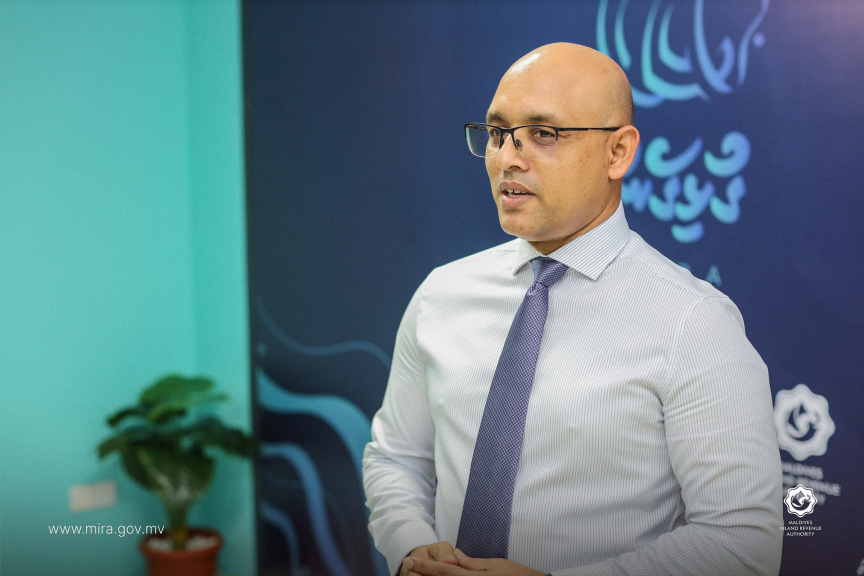
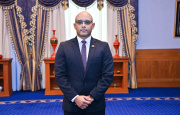
Finance Minister Hassan Zareer: Govt. has sought foreign financial assistance to tack economic challenges. (Photo/MIRA)
The Maldives has sought assistance from the World Bank and other international donors to address economic challenges stemming from rising fuel prices and declining tourism revenue, while also strengthening foreign reserves and advancing economic reforms.
In an online interview with Reuters, Finance Minister Hassan Zareer stated that, as an oil-importing country, the Maldives has been significantly affected by rising fuel prices resulting from ongoing conflicts in the Middle East. He said the impact has forced the government to triple its expenditure on energy subsidies this year, pushing the projected national budget deficit to 9 percent from the previously estimated 7.1 percent.
Minister Zareer emphasized that the government remains committed to reducing state expenditure and implementing fiscal reforms to narrow the budget deficit. However, he noted that external assistance remains essential to strengthen the economy further.
The Minister said the economy has experienced significant shocks from elevated fuel prices and declining tourist arrivals, with economic growth projected to fall as low as 1 percent in 2026.
To address disruptions to air travel and increase tourist arrivals next year, he said plans are underway to lease additional aircraft for the national airline and increase flights to Australia, currently the Maldives' eighth-largest tourism market. Zareer also disclosed that negotiations are ongoing with seven other international airlines to increase flight frequencies to the Maldives.
Zareer's remarks come following Moody’s Investors Service's recent upgrade of the Maldives' sovereign credit rating from Caa2 to Caa1, reflecting the government's efforts to meet substantial debt obligations and strengthen financial stability. Moody’s stated that the upgrade to 'Caa1' was driven by proactive measures to increase foreign currency inflows and meet debt repayment obligations, significantly reducing the immediate risk of default.
Meanwhile, the Asian Development Bank (ADB), in its Asian Development Outlook report released last month, cautioned that while growth in tourism and construction would support the economy, the Maldives remains vulnerable to global geopolitical developments, high levels of debt, and declining fisheries exports. The ADB also warned that the conflict in the Middle East could affect tourism during the peak season later this year and early next year.
The ADB further expressed concern over pressure on state finances resulting from delays in reforming loss-making state-owned enterprises (SOEs) and subsidy schemes.
Although measures were included in last year's budget to transition from universal subsidies to targeted assistance for essential goods and services such as electricity and food, President Dr. Mohamed Muizzu later decided to suspend the reforms to avoid reducing direct benefits to citizens. The decision subsequently drew criticism from economic experts.
At the same time, while the current administration initially announced plans to liquidate or merge certain SOEs as part of efforts to reduce government expenditure, the administration has since faced scrutiny over the establishment of additional companies and reports of large-scale recruitment coinciding with election cycles.