date_range
Thursday 17 Sep 2026


 LOCAL EDITION
close
 LOCAL EDITION


Then-President-elect Dr. Mohamed Muizzu (L) calls on then-President Ibrahim Mohamed Solih (R) on October 1, 2023. (Photo/President's Office)
The Maldives has finished paying off USD 150 million in T-bills extended by India as budgetary support during former President Ibrahim Mohamed Solih’s administration.
During Solih’s administration, the State Bank of India (SBI) subscribed to three USD 50 million T-bills issued by the Male’ government as budgetary support.
President Dr. Mohamed Muizzu’s administration had settled the payment on the first USD 50 million T-bill in January 2024, and the second in May.
In a statement on Thursday, the Finance Ministry announced it has settled the payment to India on the last of these T-bills – marking the full settlement of the USD 150 million debt.
The latest information released by the Maldives Monetary Authority (MMA) shows the country’s official reserve assets stood at USD 643.8 million as of the end of August, with usable reserves amounting to USD 200.6 million.
The Finance Ministry provided assurance that despite the huge debt repayment, the government had enough funds shored up to cover import of essentials such as food, fuel and medicine.
“Ensuring that people have uninterrupted access to such essential services and commodities is one of the administration’s top priorities,” stated the ministry.
“Therefore, claims that the debt repayment result in difficulties in importing essential commodities are completely baseless.”
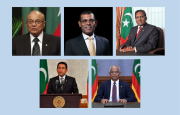
The remarks come after former President Mohamed Nasheed took to X on Wednesday to warn that settlement of the USD 50 million T-bill would deplete the country’s usable reserves, and the government would not have enough to cover essential imports.
The Finance Ministry states that the incumbent administration has been approaching the country’s massive debt obligations in a responsible and planned manner, and has been settling all payments on time.
It also added that the administration has been engaging in important discussions with international financial institutions and bilateral partners, which is expected to further strengthen the country’s foreign currency reserves.