date_range
Wednesday 14 Oct 2026


 LOCAL EDITION
close
 LOCAL EDITION


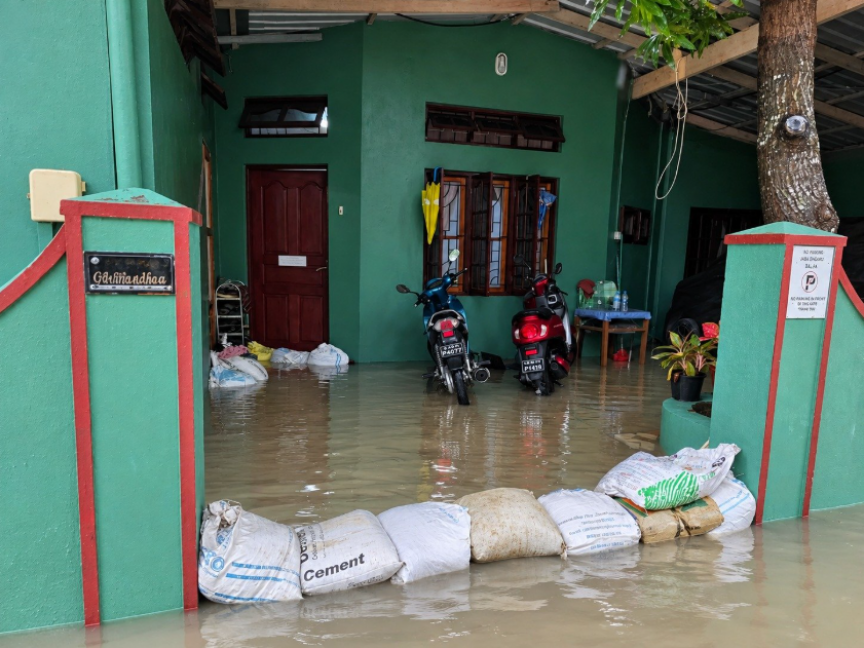
Heavy rain causes flooding in Feydhoo, Addu City: NDMA has emphasized the importance of national preparedness in tackling climate disasters. (Sun Photo/NDMA)
As the Maldives faces growing risks and concerns arising from climate-induced disasters, the National Disaster Management Authority (NDMA) has emphasized the importance of strengthening national preparedness and resilience in addressing these vulnerabilities.
In a statement issued today to mark International Day for Disaster Risk Reduction, the NDMA noted that, as a developing Small Island Developing State (SIDS), the Maldives remains highly vulnerable due to its geographical fragility, low-lying terrain, and persistent exposure to storm surges and severe weather events exacerbated by climate change.
Accordingly, the Authority stressed the need for sustainable and disaster-resilient planning, alongside increased investment in land use and infrastructure development throughout all stages of national development.
"As a developing small island nation, the Maldives faces significant risks due to its natural geographical fragility, low elevation above sea level, and the threats posed by climate change, including tidal surges and various weather-related disasters," the NDMA statement noted.
In line with the long-term vision of President Dr. Mohamed Muizzu, relevant government institutions and local councils are working together on key initiatives aimed at strengthening the country’s disaster risk management framework.
Moving beyond a predominantly reactive approach to disasters, the government is currently developing a 'National Disaster Risk Reduction Strategy' and a 'National Disaster Management Plan', with a focus on prevention and preparedness. In addition, drawing on lessons learned from global crises such as COVID-19, a 'National Emergency Operations Plan' (NEOP) has been established.
The statement also highlighted the formulation of the 'National Risk Register and Assessment 2026'—the country’s first comprehensive national-level assessment of its kind—as a significant advancement in disaster management. The assessment will facilitate the identification of potential hazards and vulnerabilities, supporting the development of national policies and the prioritization of resources.
To strengthen early warning systems across the archipelago, the 'National Early Warning Roadmap and Action Plan' is being implemented under the 'Early Warnings for All' initiative.
The NDMA concluded that the overarching objective of these initiatives is to strengthen disaster awareness at both national and local levels, while protecting the lives and property of citizens from potential disasters