date_range
Sunday 20 Sep 2026


 LOCAL EDITION
close
 LOCAL EDITION


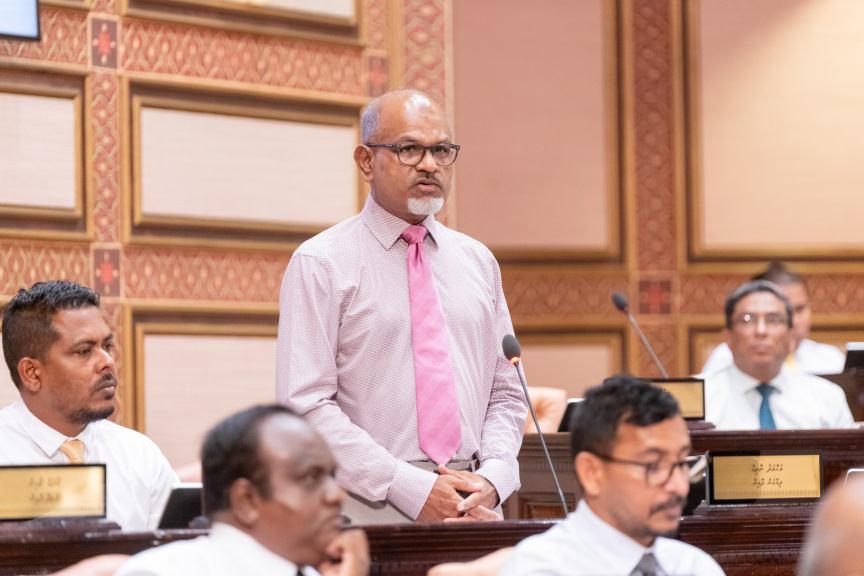
Deputy Speaker, Dhiggaru MP Ahmed Nazim. (Photo/People's Majlis)
Former Deputy Speaker and Dhiggaru MP Ahmed Nazim said Monday that Maldives Ports Limited (MPL) has around 600 more employees than required, resulting in a monthly payroll exceeding MVR 20 million.
This is the first time Nazim has spoken during a sitting since resigning as Deputy Speaker on May 31.
Speaking during the debate on the Public Accounts Committee’s report on the Auditor General’s special audit of Fenaka’s recruitment practices, Nazim said the current economic situation requires government-owned companies to be downsized or right-sized.
Nazim said the dollar has appreciated by 40 percent due to the excessive amount of rufiyaa circulating in the market. Citing the Komandoo and Maafushi by-elections held during the 19th Parliament, he described the mass hiring in SOEs as “stuffing a giant pillow with cotton,” quoting an old Maldivian metaphor.

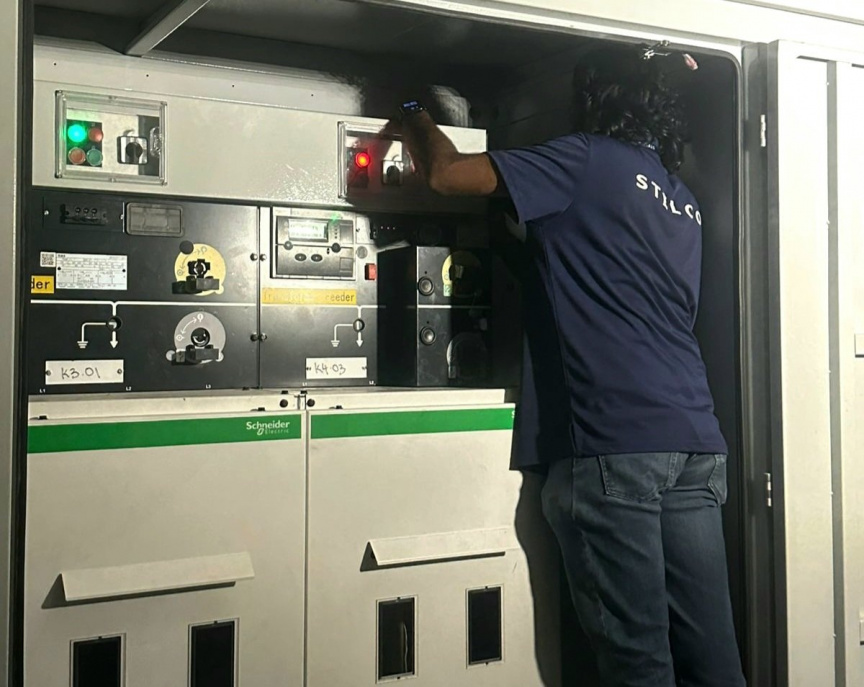
Referring to STELCO’s takeover of power supply in Meemu Atoll in June, Nazim said the powerhouses in Nalaafushi and Veyvah did not require the number of staff previously employed. He noted that after STELCO took over, the stations were operating without the 19 employees in Nalaafushi and 11 employees in Veyvah who had been on the payroll.
Nazim said he had met MPL officials alongside Deputy Speaker Ahmed Saleem while working on the Public Accounts Committee.
“One day, the then-CEO of MPL told us the company has 600 more employees than it needs. We are talking about 600 employees. If the average salary is MVR 20,000 or MVR 30,000, we are spending MVR 20 million a month. This massive amount of rufiyaa will again go chasing the dollar, and that’s how the dollar keeps appreciating. On top of that, most of these excess employees are known to sign in and go home,” Nazim said.
Nazim said employing staff in an unproductive manner is a weakness in the country’s economy.
If companies keep employees at home after hiring them “in name only,” it shows that managing directors are not fulfilling their responsibilities, he said.
“We have to make our companies fit,” Nazim added.
Although state-owned enterprises were established to deliver essential public services without relying solely on the state budget, and are expected to operate at controlled losses to ensure those services are met, the use of government-owned companies for political purposes has become extremely serious in the Maldives, resulting in poor performance, corruption, and heavy financial losses.