date_range
Monday 10 Aug 2026


 LOCAL EDITION
close
 LOCAL EDITION


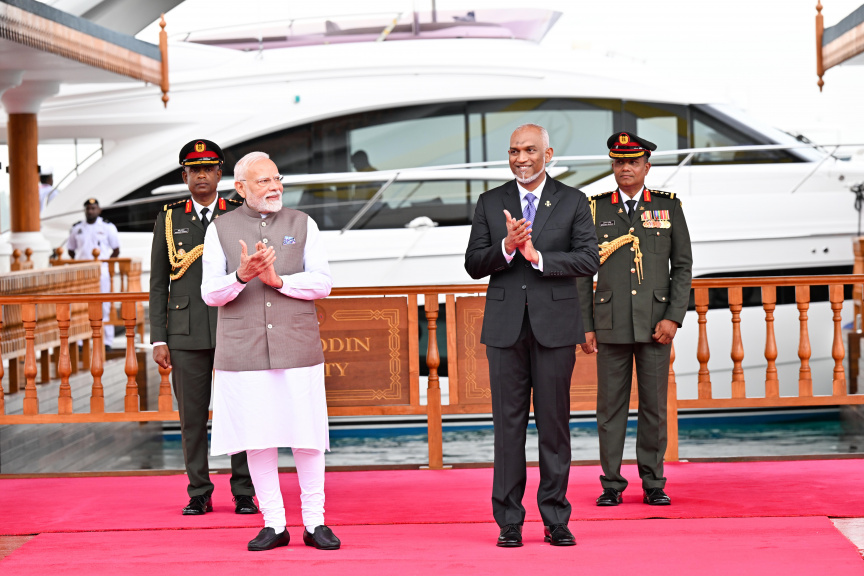
Indian Prime Minister Narendra Modi (L) and Maldivian President Dr. Mohamed Muizzu (R) on July 25, 2025. (Photo/President's Office)
The Maldives has settled the payment to India on a USD 50 million T-bill which matured Monday, says President Dr. Mohamed Muizzu.
At his weekly press briefing on Monday morning, President Muizzu said that the administration of his predecessor, President Ibrahim Mohamed Solih, had sold three USD 50 million T-bills to the State Bank of India (SBI) to cover budget gaps.
He said that the SBI subscribed to all three T-bills in 2019; on March 17, June 26, and October 1.
President Muizzu said the previous administration had asked Indian to roll over the T-bills each year.
He said that his administration settled the payment on one of the USD 50 million T-bills in January 2024, and on anither on Monday.
The last one iss due on September 17, he said.

“Therefore, we have saved the people from the USD 150 million debt trap the previous administration set,” he said.
President Muizzu said that with the with the settlement of the USD 50 million debt on Monday, his administration had repaid USD 974 million in loans within the span of the last 40 days or so.
He also criticized recent comments by former President Mohamed Nasheed warning Maldives’ bilateral partners against providing funding to the country over alleged mismanagement of funds.
President Muizzu said he finds it regrettable to see former Maldivian leaders attempt to create uncertainty among citizens and damage the country’s reputation.
He said that he finds it absurd to be criticized for paying off the debt that the former administration had racked up in the first place.
President Muizzu said he was settling the country’s staggering debt while covering the state’s payroll, ensuring a steady supply of essential commodities, paying for fuel, and providing aid to overseas students.