date_range
Sunday 20 Sep 2026


 LOCAL EDITION
close
 LOCAL EDITION


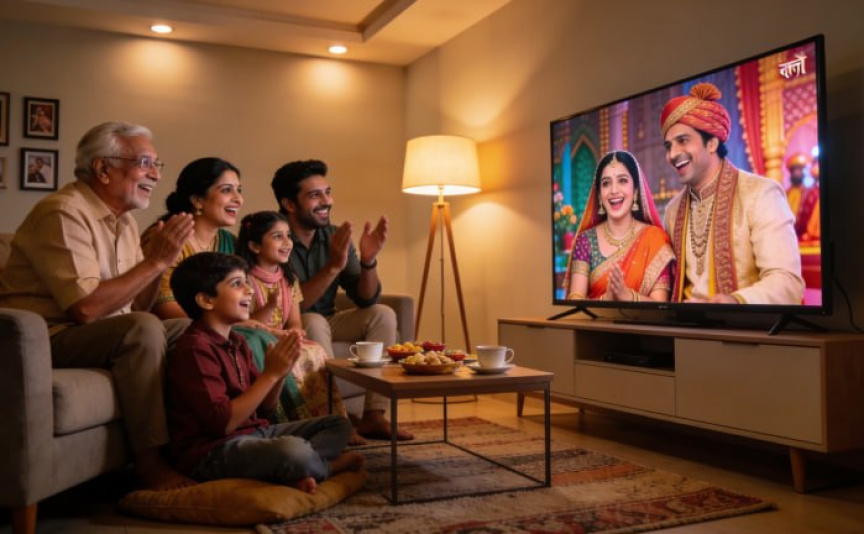
Some of my fondest childhood memories trace back to my grandmother’s room; where every evening, my maternal cousins and I would gather around her television, eagerly waiting for the opening scene of our favorite Hindi drama serials. The small room would fill with excitement, laughter, and sometimes even tears, as we followed the twists and turns of shows like Saath Nibhaana Saathiya. The dialogue, the music, the emotional intensity, all of it felt so alive, as if those stories belonged to us too.
Those evenings were more than just family bonding; they were a window into a culture that felt both foreign and familiar. Like many Maldivians, I grew up with Indian television as a daily companion. In almost every home across the Maldives, you’ll find Hindi channels like Star Plus or Zee TV playing in the background, a quiet reminder of how deeply Indian entertainment has shaped our social and cultural fabric.
Long before many of us learned the nuances of diplomacy or economics, we understood India through its stories. Indian media didn’t just entertain us, it connected us. From colorful wedding scenes to lessons about family, friendship, and resilience, these shows echoed values that resonated deeply within Maldivian households. It’s no exaggeration to say that entertainment became one of the earliest bridges in Maldives–India relations.
Music has played an equally powerful role in this bond. Hindi songs, whether from timeless classics or modern Bollywood hits, fill our playlists, weddings, and cafés. There’s something magnetic about Indian music: its melodies blend joy and melancholy in a way that feels universal. Many Maldivians can understand Hindi to some degree, but even for those who can’t, the music’s rhythm and emotion speak fluently across borders.
As streaming platforms brought Indian entertainment closer than ever, the appeal only grew. Today, young Maldivian creators draw inspiration from Indian cinema and music, borrowing its storytelling techniques, visual styles, and even emotional depth. Our local filmmakers and musicians often infuse their work with influences from Indian art, a reflection of how naturally that cultural exchange flows between our two nations. The impact is so organic that it barely feels imported anymore; it feels shared.
Beyond the screens and songs, this affinity nurtures something even more meaningful understanding. When people enjoy each other’s stories, they grow curious and empathetic. They begin to see the world through familiar emotions rather than distant borders. That’s the unsung strength of Maldives–India relations: a friendship rooted not just in politics or geography, but in culture and emotion.
Even during moments when diplomatic conversations become complex, these human connections stay unshaken. The stories, music, and laughter that we’ve shared for generations continue to remind us of how close our two peoples really are. When I think back to those evenings in my grandmother’s room cousins gathered, eyes glued to the screen, I realize that our love for Indian entertainment isn’t just nostalgia. It’s a reflection of a long-standing cultural friendship, one that has quietly but powerfully strengthened the relationship between our nations.
In the end, diplomacy may define borders and policies, but culture defines hearts. The Maldives and India share more than a history of cooperation, we share emotions, art, and stories that move us. That’s the heartbeat of our bond, and it began right where my story did, in a small room filled with family, laughter, and a flickering television set bringing two cultures together.