date_range
Monday 23 Nov 2026


 LOCAL EDITION
close
 LOCAL EDITION



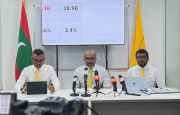
Parliament member peruses the State Budget 2027 booklet, October 29, 2026. (Photo/People's Majlis)
Lawmakers have submitted a total of 23 amendments for the proposed state budget of MVR 59.7 billion for next year.
The amendments come as the Parliament began its debate on the budget on Monday, after the Budget Committee, which decided to pass it without any changes last week, presented its report to the floor.
Before initiating the debate, Speaker Abdul Raheem Abdulla announced the budget has received 23 amendments.

He did not specify which lawmaker or lawmakers the amendments came from.
During the committee review, independent institutions complained that their budget allocation was lower than what they requested.
Responding to these concerns, Finance Minister Hassan Zareer said the proposed budget allocations were enough, and that any additional expenses that may arise will be covered under the contingency budget.
Zareer presented the proposed state budget of MVR 59.7 billion for next year at the Parliament on October 29.

The budget is around MVR 4.5 billion lower than the record MVR 64.2 billion budget approved for this year, but is heavy on recurrent expenditure.
The government projects total expenditure to reach MVR 52.6 billion, well above the MVR 43.2 billion in projected revenue and grants.
This is expected to result in an overall budget deficit of MVR 9.4 billion, making for a budget deficit-to-GDP ratio of 7.3 percent.
MVR 42.7 billion is expected to go into covering recurrent expenses – making for a staggering 81 percent of total expenditure.
2027 budget highlights:
The biggest focus area for next year’s budget is healthcare, with MVR 10.2 billion allotted for the sector.
Addressing the Parliament on October 29, Zareer said that next year’s budget is focused on maintaining the government’s foreign debt interest payments at 12 percent of its total revenue.
He said that the government projects the debt-to-GDP ratio to be at 117 percent next year, and aims to lower it to 116.3 percent in 2028, and 107.9 percent in 2029.
The Maldives’ record high budget of MVR 64.2 billion for 2026, was focused heavily on servicing the staggering debt obligations of USD 1.1 billion which came due this year.
The country’s high debt had prompted global credit rating agencies to downgrade Maldives’ ratings last year.

However, the country rallied to repay major debt obligations this year, materially reducing its near-term default risks.
This includes the repayment of the USD 500 million sukuk in April, the settlement of the USD 400 million currency swap facility from the Reserve Bank of India (RBI), alongside securities investments from the State Bank of India (SBI) totaling USD 100 million in May and September, and the rollover of the USD 100 million Eurobond until 2031.
Fitch Ratings upgraded the Maldives' credit rating from 'CC' to 'CCC-' in June, and Moody’s followed suit earlier in October, raising the credit rating from Caa2 to Caa1 with a stable outlook.
According to Moody’s, the upgrade also reflects stronger foreign exchange inflows, and continued access to bilateral and multilateral financing.
However, while Moody’s cited a material reduction in the government's near-term default risk, the agency warned that the country continues to face persistent fiscal, external and government liquidity risks.