date_range
Friday 23 Oct 2026


 LOCAL EDITION
close
 LOCAL EDITION


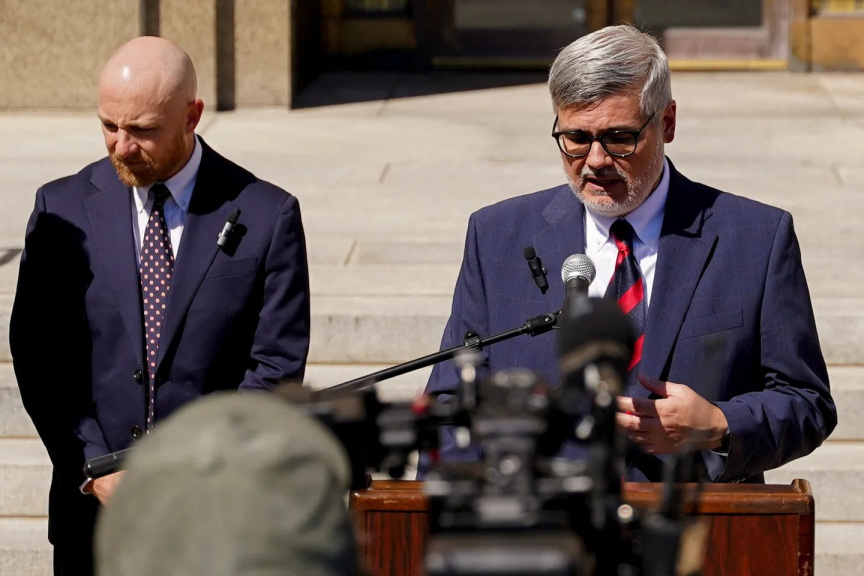
Attorneys for Christa Pike, a death row prisoner who survived a botched execution, hold a press conference in Nashville. (Photo/Reuters)
Members of the execution team tasked with putting Tennessee death row inmate Christa Pike to death repeatedly questioned whether they had damaged her veins while attempting to establish an intravenous (IV) line, according to a detailed account by her lawyer.
The team used about 10 needles and spent nearly 50 minutes trying to establish a working line before proceeding with the lethal injection on September 30, attorney Randy Spivey said in a court filing cited by The Guardian.
Team members expressed concern that Pike’s vein might have “blown”, meaning it had ruptured, and struggled to determine whether the needle had entered the vein, according to Spivey, who witnessed the execution attempt.
Despite the difficulties, the team proceeded with the injection. Pike remained alive and made snoring and choking sounds before the execution was called off.
Pike, 50, spent 10 days in hospital before returning to prison in Nashville. She has since regained the ability to walk and talk, but her long-term medical prognosis remains unclear.
Scrutiny of execution procedures
The failed execution has intensified scrutiny of Tennessee’s lethal injection procedures. Republican Governor Bill Lee suspended executions in the state pending a review.
The case has also drawn attention to the attempted execution of another death row inmate, Tony Carruthers, who survived an execution attempt in May after officials struggled to find a vein.
Lawyers representing death row prisoners say the two cases highlight serious flaws in the state’s execution protocol. They have renewed their legal challenge, arguing that the procedures risk causing severe pain and suffering.
Pike was sentenced to death for the 1995 murder of Colleen Slemmer, a classmate she killed when she was 18.
___
Source: TRT