date_range
Friday 23 Oct 2026


 LOCAL EDITION
close
 LOCAL EDITION


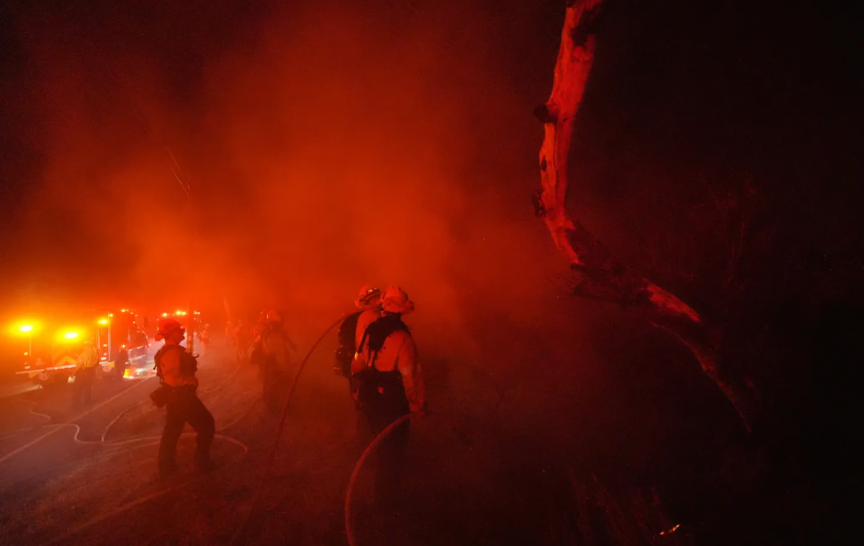
Crews make a stand in front of the Bryson Fire on October 15, 2026, in Malibu, California. (Photo/AP)
Wind-whipped flames have scorched multi-million dollar homes south of Los Angeles as a wildfire quickly ravaged hundreds of acres.
Dramatic footage on Friday showed burning homes and thick smoke billowing from the tinder-dry bushy hills, where the quick-spreading fire is fuelled by intense Santa Ana winds, low humidity and unseasonably high temperatures.
The Orange County Fire Authority said on X that the so-called Norte fire had scorched about 465 acres and that at least four homes had been impacted in the affluent San Juan Capistrano municipality.
The agency said firefighters were "aggressively attacking the fire from ground and air" and issued repeated pleas for people to stay clear of the area.
The fast-moving blaze prompted widespread evacuation orders as multiple helicopters vied to douse the flames.
Officials also warned of poor air quality for residents nearby.
The National Weather Service warned of "high risk for large fires and rapid fire growth" especially over Los Angeles and Ventura counties, as well as the mountains and foothills of San Luis Obispo and Santa Barbara counties.
Firefighters were also busy battling the Bryson fire, which broke out overnight on the outskirts of the famed Malibu beach community. As of Friday afternoon that conflagration was at 147 acres and 17 percent contained, according to the state's Cal Fire agency.
And the Marine Corps Base Camp Pendleton was impacted by the Henderson Fire, which prompted freeway closures and had burned at least 2,070 acres by Friday, according to Cal Fire.
Residents told to be ready for emergency evacuations
Tens of thousands of customers in Los Angeles county alone were without power, as authorities de-energised power lines in a bid to lessen the possibility of electrical sparks that the heavy wind gusts could carry.
The fierce winds were set to peak on Friday across Los Angeles County but the high heat and low humidity meant the high fire danger would continue into the weekend.
Forecasters said winds roared between 80 and 110 kilometres per hour in the mountains, with coastal and valley areas seeing gusts between 55 and 90 kilometres per hour.
In some areas temperatures soared as high as 38 degrees Celsius, the National Weather Service said.
The weather authority said fire danger would remain through much of the day on Saturday, warning residents to be prepared for emergency evacuations.
They also cautioned drivers about dangerous crosswinds, particularly on elevated roadways.
___
Source: TRT