date_range
Wednesday 07 Oct 2026


 LOCAL EDITION
close
 LOCAL EDITION


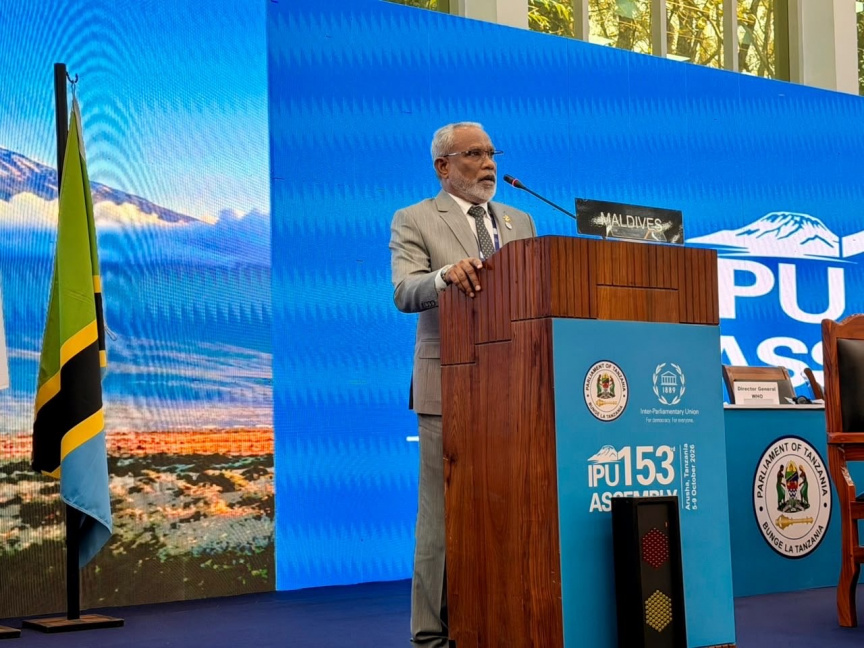
Speaker Abdul Raheem Abdulla addresses the 153rd Assembly of the Inter-Parliamentary Union, underway in Arusha, Tanzania, October 6, 2026. (Photo/People's Majlis)
The 153rd Assembly of the Inter‑Parliamentary Union (IPU) is underway in Arusha, Tanzania. Speaker of the People’s Majlis Abdul Raheem Abdulla addressed the Assembly, which began Monday and will continue until next Friday, on strengthening good governance and empowering communities through fair and inclusive opportunities.
According to the Speaker, good governance is not only tied to institutions but is fundamentally connected to the people. He said listening to citizens, ensuring equal opportunities, and building trust in state systems form the most important foundations of a democracy. Beyond passing laws, legislators must monitor policy implementation, safeguard public resources, and create avenues for communities to participate in decisions that affect their lives, he said.
He highlighted the importance of collaboration among parliaments at the international level, noting that platforms such as the IPU provide valuable opportunities for countries to share experiences and strengthen democratic practices.
Speaking on the role of technology in an island nation like the Maldives, Abdul Raheem underscored the importance of digital systems in improving governance. He said platforms such as eFaas have brought government services closer to the people. More than 272,000 people are registered on eFaas, around 80 percent of the population above the age threshold, and the system currently provides services from 17 government agencies through the OneGov platform.
Digital services are expanding, and the Maldives is working to ensure they remain secure, transparent and inclusive, he said. The government is also focused on preventing the spread of misinformation and ensuring that technology is used for the benefit of the people. Efforts to strengthen digital literacy are an important step toward using technology in line with democratic principles, he added.
Abdul Raheem said the Constitution and the Decentralization Act provide crucial frameworks for bringing governance closer to communities. Ensuring that every citizen has the opportunity to be heard and participate in shaping the nation’s future is the essence of good governance, he said.
He noted that public trust in institutions is built through transparency and responsibility. The Maldives’ Right to Information Act is a key example, giving citizens access to information held by public agencies and enabling them to understand how government institutions operate. He added that people can submit concerns to parliament through petitions and digital tools, strengthening accountability.
The Speaker stressed the importance of empowering institutions such as the Anti‑Corruption Commission (ACC) to maintain the integrity of the state. He said the ACC plays a vital role in preventing misuse of public funds and property, and called for ensuring the independence of such bodies.
He said good governance cannot be achieved through laws written on paper alone if institutions fail to deliver results. The reality of good governance, he said, is measured not by the names of institutions but by the positive changes felt in people’s lives. People want their voices heard, fairness in public dealings, and opportunities to build a brighter future, he said.