date_range
Thursday 01 Oct 2026


 LOCAL EDITION
close
 LOCAL EDITION


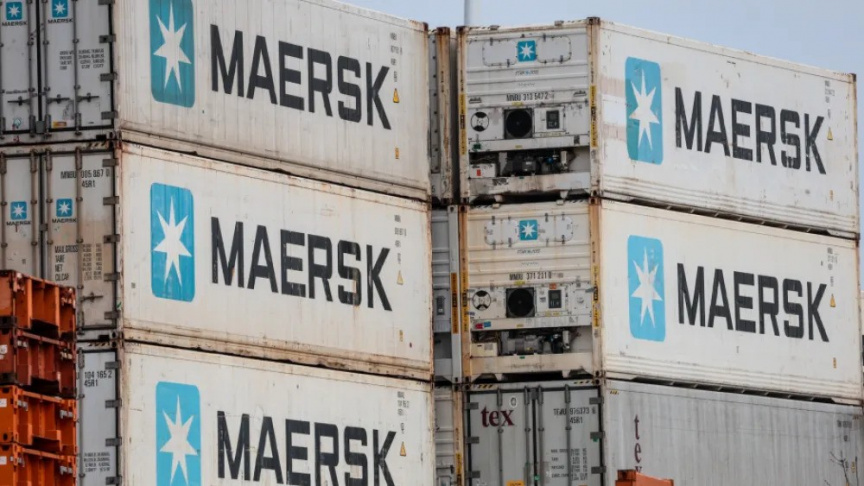
Maersk cuts Emergency Contingency Surcharge applicable to containers transported from the Maldives to Northern Europe and Mediterranean region. (Photo/Getty Images)
Maersk, one of the world's leading shipping conglomerates, has announced a reduction in the Emergency Contingency Surcharge (ECS) applicable to containers transported from the Maldives to Northern Europe and the Mediterranean region.
The adjustment specifically applies to cargo shipped from Indian subcontinent routes, including the Maldives, to Northern Europe and the Mediterranean region. According to Maersk's latest rate notification, the revised tariffs will come into effect next Wednesday.
The ECS is an additional charge imposed separately from ocean freight rates and other local service fees.
Under the revised pricing structure, the ECS for 20-foot standard containers originating from the Maldives and Sri Lanka and destined for Northern Europe will be reduced from USD 3,500 to USD 3,200. Meanwhile, the surcharge for 40-foot and 45-foot high-cube containers will be lowered from USD 3,900 to USD 3,300. The changes represent reductions of USD 300 for 20-foot containers and USD 600 for the larger units.
The same rate reductions will apply to shipments bound for the Mediterranean region. Maersk has stated that the revised tariffs will apply to both standard equipment and specialized containers, including Out of Gauge (OOG), Shipper Owned Containers (SOC), and Non-Operating Reefers (NOR). For 40-foot Flat Rack and Open Top containers, the applicable rates will be the same as those for standard 40-foot containers.
The reduction is expected to ease shipping costs for Maldivian businesses involved in trade with European markets, providing particular financial relief to enterprises with established commercial links in Europe. However, a decrease in this particular surcharge does not necessarily mean that overall shipping costs will decline. The final freight cost remains dependent on several factors, including base freight rates, bunker fuel adjustments, terminal handling charges, container specifications, and the final destination. In addition, the terms of individual agreements between shippers and the carrier will also affect the total cost. As a result, the overall cost of each shipment will be determined by the combined impact of these factors.
Maersk regularly reviews and adjusts its surcharges across maritime routes worldwide. In August, the company also introduced surcharge revisions for cargo originating from South Asian countries—including India, Bangladesh, Sri Lanka, Nepal, and the Maldives—and destined for the United Arab Emirates (UAE).
According to Maersk's official announcement, the latest rate changes will formally take effect upon receiving the required regulatory approvals. Customers will see the revised rates reflected in upcoming invoices.