
date_range
Tuesday 29 Sep 2026


 LOCAL EDITION
close
 LOCAL EDITION


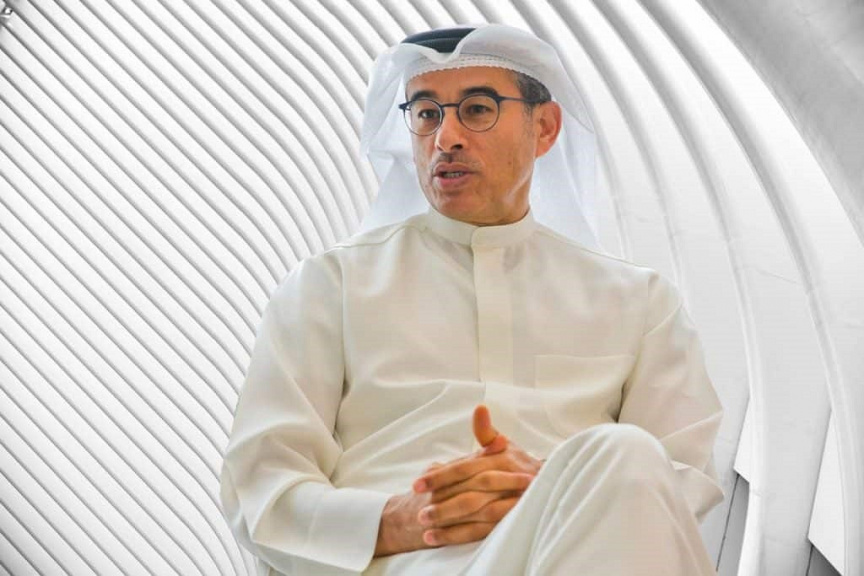
Mohamed Alabbar, founder and chairman of Eagle Hills.
For millions of people around the world, the Maldives is a destination to unwind and refresh. Clear turquoise waters, overwater villas in lagoons, and breathtaking beaches offer an opportunity to step away from the noisy environment of everyday life. However, the question asked by Mohamed Alabbar, Chairman of Abu Dhabi's Eagle Hills, is different. His goal is to make the Maldives a place where people can actually live, rather than just a place to spend a vacation.
In a video shared on social media today following a historic agreement signed between Eagle Hills and the Maldivian government, Alabbar stated that there is only one Maldives in the world.
"When people get tired, they say, 'I want to go to the Maldives.' The most perfect holiday, the most beautiful place: that is the Maldives. So, there is no reason why it shouldn't also be the most perfect place to live," he noted.
This is the core vision behind the "Maldives Waterfront and Marina" being developed by Eagle Hills as part of the Ras Malé project.
Alabbar is no stranger to large-scale mega-projects. He is the founder of Emaar Properties, which developed iconic landmarks such as Dubai's Burj Khalifa and The Dubai Mall. Subsequently, his company Eagle Hills has been executing major international projects such as the Durrës Yachts & Marina in Albania and Maryam Island in Sharjah. However, Alabbar says the Maldives project stands out due to the immense global popularity attached to the country's name. His aim is to go beyond the boundaries of traditional tourism and introduce luxury living rather than just a luxury holiday.

Located in the Fushidhiggaru Lagoon—a 17-minute speedboat ride from Malé—Eagle Hills will develop approximately 500 hectares of reclaimed land in Rasmalé. Rather than being a standard resort, this is designed as a complete city incorporating high-quality homes, hotels, a marina, commercial spaces, as well as healthcare and educational services.
"We are building a lifestyle where people can stay for a month or even a week," Alabbar said.
Government officials describe the portion being developed by Eagle Hills as an integrated township featuring properties across various tiers and price ranges. This includes international schools, hospitals, children's play parks, theme parks, along with facilities required for both tourism and residential living.
Looking at the financial estimates, the Maldivian government has characterized this project as a USD 20 billion (approximately MVR 308 billion) investment. However, Eagle Hills stated that the section developed by the company will cost USD 12 billion, executed in phases. As reported by The National, this project is expected to bring over USD 30 billion in gross foreign direct investment into the Maldives. Furthermore, upon completion, it is estimated that over one million people will visit annually, generating USD 2 billion in annual tourism revenue and creating more than 54,000 jobs.
Alabbar stated he believes the returns generated from this project could reasonably rank among the best globally.
Under this project, land plots and properties will be leased for a 99-year period under Maldivian laws. According to Eagle Hills, subject to government authorization, these properties can be transferred to other parties or inherited. However, the government clarified that ownership of the Rasmalé land itself has not been granted to Eagle Hills. Furthermore, the government noted that purchasing a property will not automatically grant residency rights in the Maldives, and immigration regulations must be followed.
On environmental considerations, Eagle Hills stated that construction will take place on already reclaimed land and that the company will not perform any further lagoon reclamation. The company added that an independent third party will monitor marine life throughout the process.

"We must be honest, and we must respect the people and the environment," Alabbar said.
He pledged that work would proceed safely without harming sea turtles, fish, or coral reefs.
The overall Ras Malé project spans a vast area of over 1,100 hectares, with plans to establish 65,000 housing units. The project aims to alleviate congestion in crowded Malé and provide necessary housing solutions.
Alabbar noted that the Maldivian people have entrusted his company with the largest investment in their history.
"This is an honor for us," he said.
Praying that God grants them the ability to fulfill the work according to the public's expectations, he highlighted that the nation's name and reputation would be prioritized in everything the company does.
With this mega-project, the Maldives' status as merely a holiday destination will transform. It aims to become a complete environment where families can stay for up to a month, children can play, and people can work, exercise, and relax. If Alabbar's vision becomes reality, it will mark a shift from simply coming to the Maldives for a vacation to coming to live in the Maldives.