date_range
Saturday 22 Aug 2026


 LOCAL EDITION
close
 LOCAL EDITION


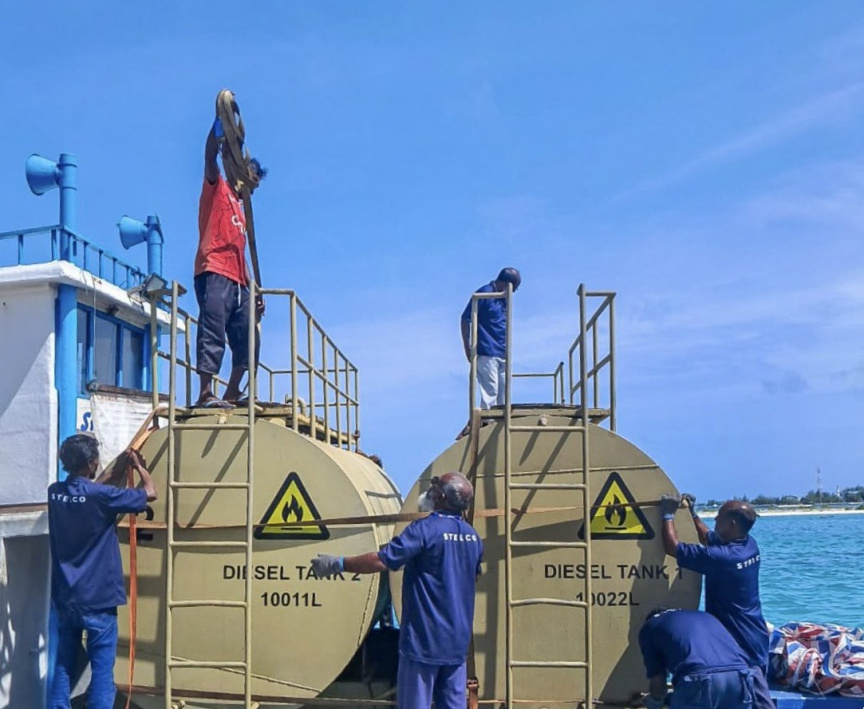
STELCO workers unload fuel storage tanks sent to M. Atoll on July 5, 2026. (Photo/STELCO)
The government spent an additional MVR 453 million on subsidizing electricity services last year, as crucial subsidy reforms it announced remained tabled.
President Dr. Mohamed Muizzu administration had included major reforms in its 2025 budget, including phasing out broad subsidies in favor of targeted subsidies. As such, the Finance Ministry removed MVR 2.4 billion in subsidies from the budget, and added MVR 900 million to the direct subsidies section.
But halfway into the year, President Muizzu announced that he will not be implementing subsidy reforms, stating that he does not want to deprive the people of any benefit they enjoy.
The 2025 budget outcome statement released by the Finance Ministry shows that while the Parliament approved an allocation of MVR 379 million on electricity subsidies, the actual spending rose to MVR 832 million by the end of the year.
This marks an increase of MVR 453 million or 119 percent.
The actual spending on food subsidies also rose from the approved MVR 93 million to MVR 383 million by the end of the year – marking a 312 percent jump.

Food subsidies are mainly provided on staples such as rice and flour. Data shared by the Statistics Bureau shows the inflation rate rose to the highest level in 13 years last year, with the price of food alone rising by 4.7 percent.
International financial institutions have been urging the Maldives for years to shift to targeted subsidies and implement other reforms in order to alleviate risks of it defaulting on its staggering external debt obligations.
Electricity alone is heavily subsidized in the Maldives, and the burden on the budget to on utility subsidies have continued to increase with each passing year. State utility companies are supplied fuel for electricity generation at a below-market rate in order to keep utility bills down. The difference is covered by the state.
Utility companies are also provided subsidies to cover the loss of revenue from utility discounts offered by the government during occasions such as Ramadan.
In the 2026 budget, the Finance Ministry wrote in boosting green energy initiatives and shifting from diesel to LNG as measures to reduce the spending on electricity services.
The Finance Ministry forecasts that a full shift to green energy and LNG in the greater Male’ area will help the state stop its spending on provision of electricity services in the capital, and save up to MVR 13.9 billion over the next 10 years.