date_range
Friday 25 Sep 2026


 LOCAL EDITION
close
 LOCAL EDITION


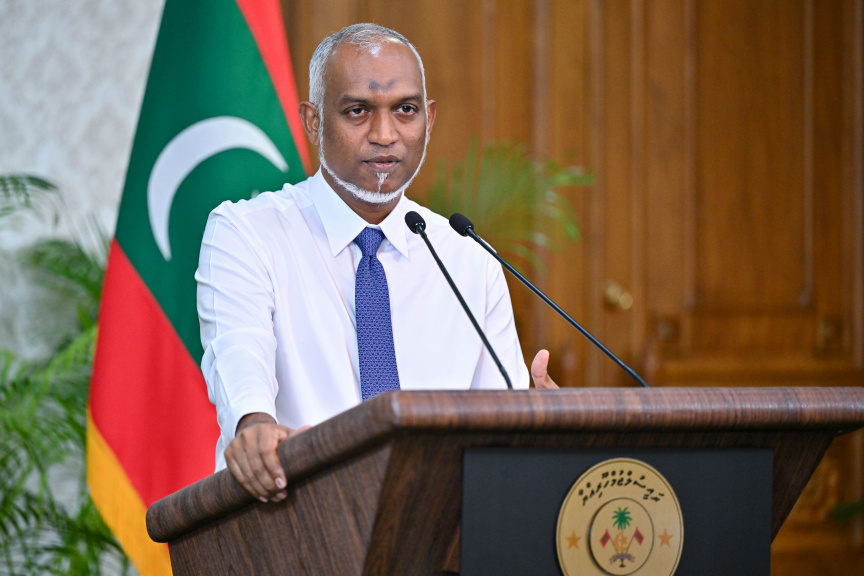
President Dr. Mohamed Muizzu speaks to reporters on April 27, 2026. (Photo/President's Office)
President Dr. Mohamed Muizzu states he decided against ratifying the human organ transplant bill passed by the Parliament in May because it allows organ donation by prisoners even though incarcerated individuals cannot provide truly voluntary, coercion-free consent.
The landmark organ transplant bill was passed by the Parliament on May 14. But President Muizzu decided against ratifying it, and sent it back to the Parliament for review on May 31. He did not specify the reason for his decision at the time.
In a letter to the Parliament, which was read during Wednesday’s sitting, President Muizzu explained his concerns stemmed from the legislature’s decision to remove provisions in the original bill drafted by the Attorney General’s Office which barred individuals in state custody, or any individual serving a prison sentence or is detained on suspicion of committing a crime from donating their organs.
President Muizzu stressed that it is universally accepted that consent is key to organ donation.
“Given that incarcerated individuals are in a unique state where their prerogative and freedom are constrained, I do not believe they can be deemed to be able to provide truly voluntary, coercion-free consent for something like organ donation,” he wrote.
President Muizzu said that organ donation is allowed in countries only after ensuring that all requirements are met.
He believes that allowing prisoners to donate organs without formulating specific policies on that would create major obstacles to implementing the law.
The organ transplant bill was also designed to criminalize:
The bill allowed only living-donor transplants.