date_range
Friday 21 Aug 2026


 LOCAL EDITION
close
 LOCAL EDITION


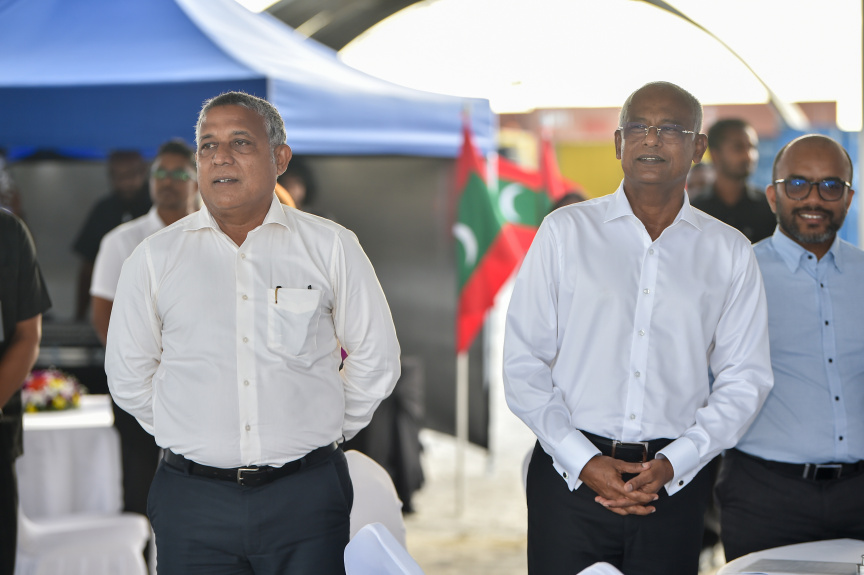
Former President Ibrahim Mohamed Solih (R) with then-Housing Minister Mohamed Aslam (L): An audit has concluded that Binveirya scheme launched during the administration failed to meet its objectives. (Photo/President's Office)
A performance audit has concluded that the ‘Binveriya’ housing scheme, by former President Ibrahim Mohamed Solih’s administration to allocate land in the Greater Malé area, failed to achieve its primary social housing objectives.
A large number of land plots were issued from the Male’ area during the previous administration. However, the process drew widespread criticism and allegations of unfairness, particularly over the allocation of high-value plots free of charge.
The audit report, published by the Auditor General’s Office last Thursday, stated that although the scheme was intended to address Malé’s housing crisis, it did not meet this objective. The report found that implementation did not prioritize those in the most urgent need of housing, nor did it adequately consider applicants’ living conditions. It also noted a lack of sufficient research into market trends and housing demand by the previous administration.
The main eligibility criteria for the large-scale project included being a registered resident of Malé, being at least 18 years old, and not having land registered in one’s name. However, the audit emphasized that the core principle of social housing is to provide state assistance to individuals who are financially or otherwise “incapable” of securing housing independently.
“By limiting the allocation of such valuable land exclusively to those on the Malé registry without assessing their actual level of need, many families living in the Malé area who were in dire need of social housing were deprived of this opportunity,” the audit stated.
As a result, the Audit Office concluded that the Binveriya scheme did not function as an effective mechanism for achieving the intended goals of social housing.
The findings come amid ongoing housing pressures in the Malé region, where a significant portion of the population lives, and many internal migrants continue to face high rental costs and difficult living conditions. Financial records also indicate that the free distribution of land under the scheme resulted in a projected loss of approximately MVR 15 billion for the Housing Development Corporation (HDC).