date_range
Monday 10 Aug 2026


 LOCAL EDITION
close
 LOCAL EDITION


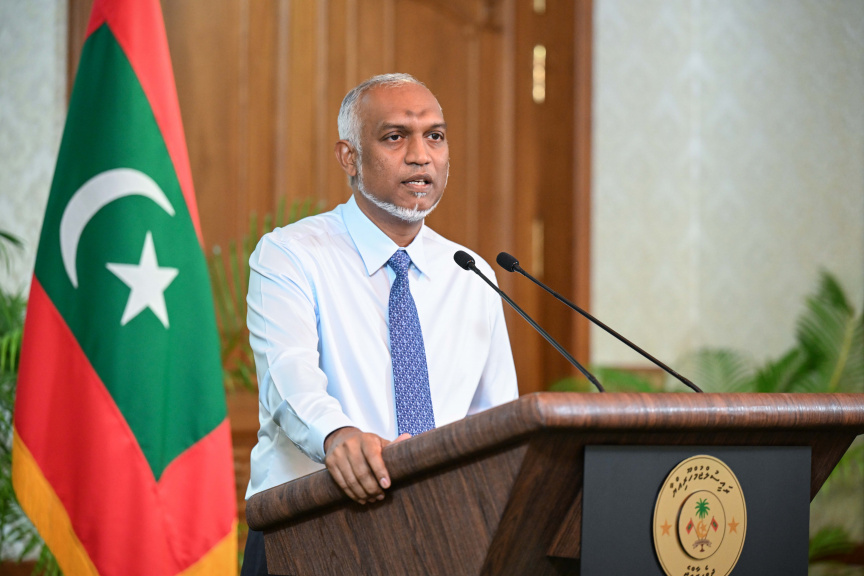
President Dr. Mohamed Muizzu speaks to reporters on May 11, 2026. (Photo/President's Office)
President Dr. Mohamed Muizzu says that his administration is assessing the adverse effects of the conflict in the Middle East on the Maldives tourism sector, and exploring ways to support businesses operating in the industry.
The remark comes after top tourism associations the Maldives Association of Travel Agents and Tour Operators (MATATO) and the National Hotels and Guesthouses Association of Maldives (NHGAM) issued a joint statement warning that the losses suffered by the Maldives tourism sector since March had surpassed USD 500 million.
They asked for urgent government support.
At his weekly press briefing on Monday, President Muizzu said the special cabinet committee set up in response to the Middle East conflict was closely monitoring the situation and studying the impact on the tourism sector.
He said that the committee was engaged in discussions with various tourism industry stakeholders.
President Muizzu said that based on the results of the research, the administration will identify and implement measures to support businesses operating in the tourism sector.

Tensions have been high in the Middle East since the US and Israel launched strikes against Iran on February 28, triggering retaliation from Tehran against Israel, as well as US allies in the Gulf. It also led to the partial closure of air corridors in the Middle East – key transit hubs for tourists – resulting in a significant dip in tourist arrivals to the Maldives.
A ceasefire took effect on April 8 through Pakistani mediation, but tensions remain high after talks in Islamabad failed to produce a lasting agreement.
In a statement on Saturday, MATATO and NHGAM said that based on current arrival trends, booking patterns, and cancellations, the Maldives tourism sector has already suffered losses estimated at over USD 500 million since March.
“The continued downturn poses a serious threat to businesses, employment, foreign exchange earnings, and the overall stability of the national economy,” warned the associations.
The associations asked for urgent government support, including introducing special loan facilities and emergency financing schemes, as well as interest-free moratoriums, loan restructuring support, tax deferrals, and fee waivers.