date_range
Sunday 20 Sep 2026


 LOCAL EDITION
close
 LOCAL EDITION


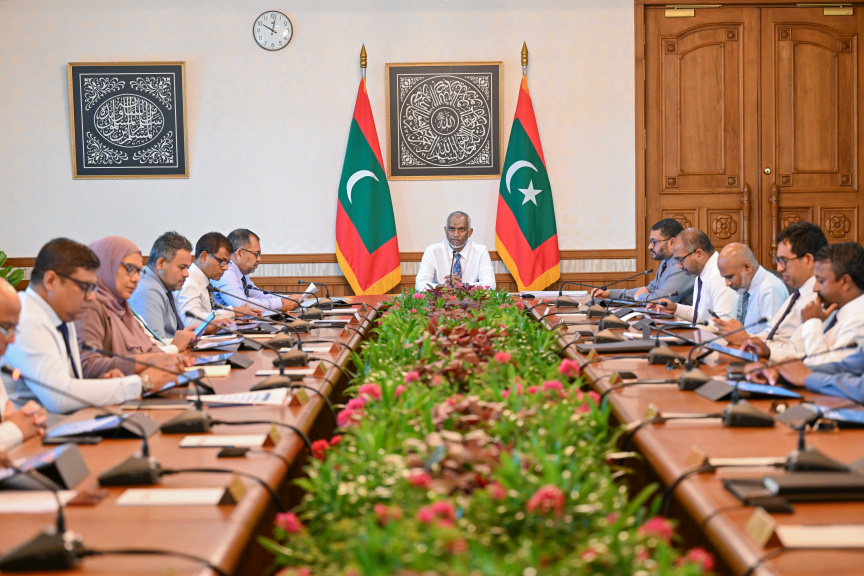
President Dr. Mohamed Muizzu chairs a cabinet meeting. (Photo/President's Office)
President Dr. Mohamed Muizzu states that not all ministers were removed from his cabinet due to poor performance, and that some of them had provided sincere service.
At his weekly press briefing on Monday morning, President Muizzu said his administration is continuing efforts to downsize and cut costs.
Addressing the recent appointment of former Attorney Aeneral Fathimath Dhiyana Saeed, former Environment Minister Thoriq Ibrahim, and former Local Government Minister Adam Shareef Umar as Ambassador-at-Large at the Foreign Ministry, President Muizzu said that the government had several vacancies, including the post of high commissioners.
But he said that the decision to reduce political appointments and cut costs will be “strictly enforced.”
“The first step was to reduce ministries and increase some of the responsibilities of ministers. Reducing the number of ministers and ministries was the first step,” he said.
He said that the President’s Office is working on setting specific allocations for political appointments to each ministry. But he said that employees will be dismissed based on their performance.
He also said that not all ministers were removed from his cabinet due to poor performance.
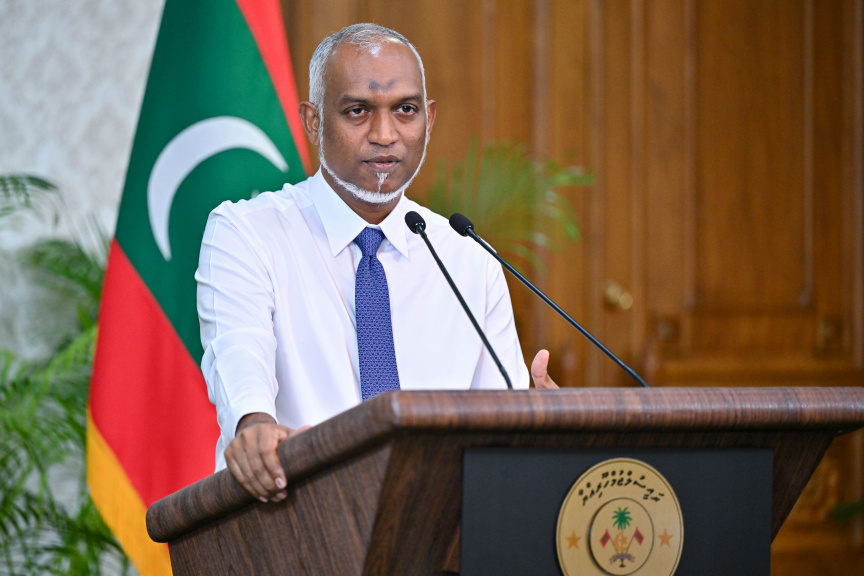
“Not everyone was removed due to poor performance. There are some who worked very well, who worked very productively and very well. But I decided to make these changes in order to downsize the government and change how the government functions,” he said.
Both Thoriq and Adam Shareef had been part of President Muizzu’s original 22-member cabinet. Thoriq was initially appointed as the environment minister, and then as environment and tourism minister after the two ministries were merged in February 2025.
But they, along with eight other ministers, were asked to resign on April 14. The President’s Office said at the time that they had resigned to provide room for President Muizzu to run the government “in accordance with the aspirations of the people.”
The major reshuffle came after the government suffered a heavy defeat on April 4 in the local council elections and a referendum seeking to combine presidential and parliamentary elections.