date_range
Saturday 21 Nov 2026


 LOCAL EDITION
close
 LOCAL EDITION


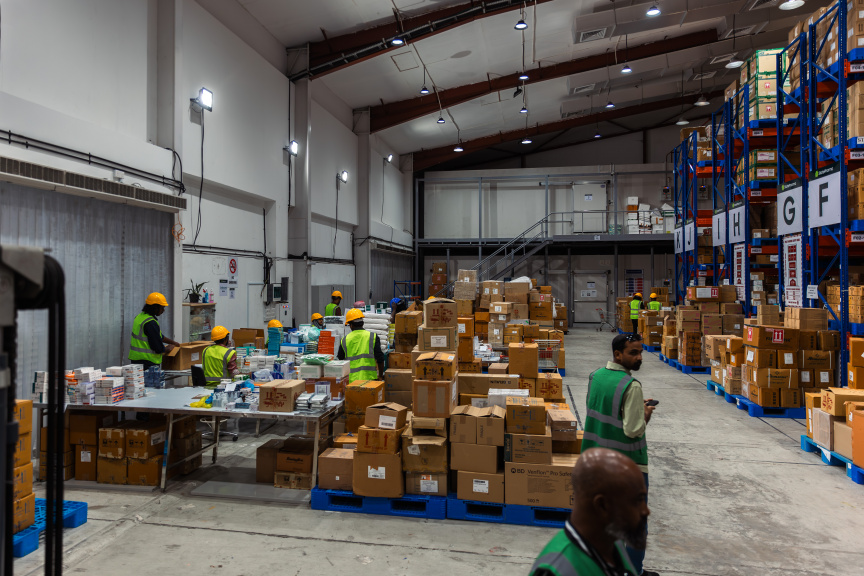
Inside the State Pharmaceutical and Medical Supply Corporation Limited (StatePharma)'s Hulhumale' warehouse, November 10, 2026. (Sun Photo/Mohamed Shathiu Abdulla)
Dr. Shah Mahir, Managing Director of the State Pharma Company, has stated that if the company’s current operations continue at the present pace, significant progress in addressing the ongoing medicine shortage is expected early next year.
The Maldives has faced persistent challenges with medicine availability, prompting widespread public concern. To address the issue, the government established a dedicated state-owned pharmaceutical company, transferring procurement and supply responsibilities previously handled by STO to the new entity.
Speaking from the State Pharma warehouse last Tuesday, Dr. Shah explained that the crisis had been exacerbated by longstanding neglect of supply chain management. Since assuming leadership in August, his primary focus has been on modernizing the supply chain by establishing essential systems and infrastructure.
Key improvements include the introduction of Enterprise Resource Planning (ERP) software and a real-time monitoring system to track medicine stock levels and varieties across the country. According to Dr. Shah, these tools enable the company to forecast demand and place orders well in advance.

He further explained that pharmaceuticals cannot be procured as easily as other commodities, noting that the industry is highly regulated and requires strict temperature controls during transportation.
"Manufacturing plants do not always maintain ready-to-ship stocks for an entire country's requirements. Often, large orders are manufactured specifically upon request, which necessitates a significant lead time," Dr Shah added.
State Pharma is currently working to secure supplies for the coming year, managing a portfolio of more than 5,000 types of medicine. Given the variety of products and their differing expiration dates, Dr. Shah acknowledged the complexities involved in placing orders but emphasised that the immediate priority is to stabilise the supply of essential medicines.
Over the past four months, more than 600 types of medicine have been imported. However, Dr Shah acknowledged that this remains insufficient, noting that efforts are underway to replenish stocks of medicines nearing depletion.
"If we maintain our current speed, we expect to deliver a noticeable positive impact to the public by early next year. Our goal is to ensure that the medicines required by the citizens are consistently available."
The medicine shortage remains a major public concern. Citizens often have to visit multiple pharmacies to find their prescribed medications and incur substantial out-of-pocket expenses when certain medicines are not covered by the Aasandha insurance scheme.