date_range
Tuesday 10 Nov 2026


 LOCAL EDITION
close
 LOCAL EDITION


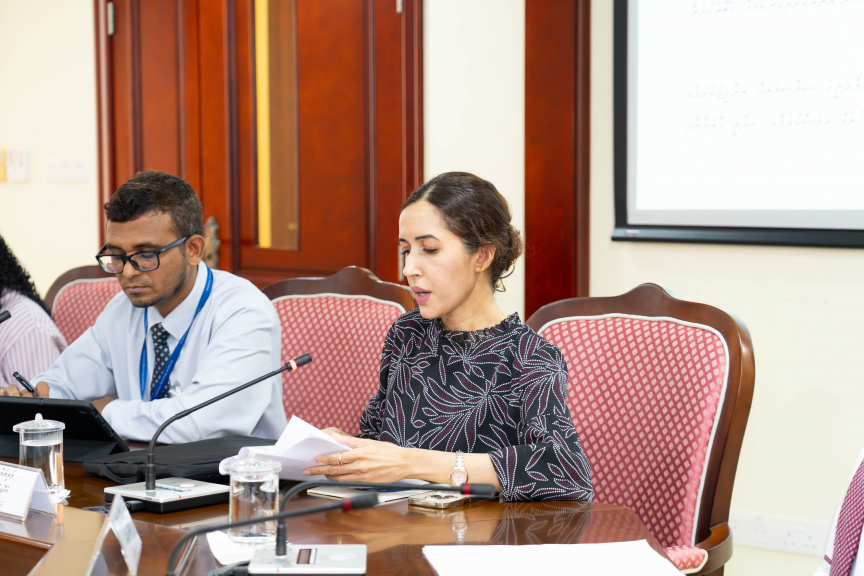
MMA's Mariyam Rashfa, Managing Director of the Monetary Policy, Economics and Statistics Department speaks at the parliament's Budget Committee, 5th sitting, November 10, 2026. (Photo/People's Majlis)
The Maldives Monetary Authority (MMA) has said implementing a targeted subsidy system is crucial to reducing electricity subsidy expenditure and strengthening fiscal sustainability.
The central bank submitted its recommendations on the proposed 2027 state budget to Parliament's Budget Committee on Tuesday.
Presenting the MMA's recommendations, Mariyam Rashfa, Managing Director of the Monetary Policy, Economics and Statistics Department, said current projections indicate expenditure on fuel and electricity subsidies will decline next year. However, she warned that risks remain due to uncertainty in the Middle East and the possibility of higher global oil prices.
Rashfa said a rise in oil prices could increase spending on fuel and electricity subsidies, place additional pressure on official reserves due to higher fuel import costs and increase the country's dependence on external financing.

As a result, she said the country should take measures to prepare for such a scenario.
"Therefore, it is very important to review the current subsidy policy and implement a targeted subsidy system in order to reduce expenditure on electricity subsidies," Rashfa said.
The MMA's recommendation comes as government spending on subsidies continues to exceed budgeted levels. According to the latest figures released by the Finance Ministry, MVR 4.3 billion has been spent on subsidies this year despite an approved budget of MVR 2.89 billion for fuel and staple food subsidies.
Announcing details of the proposed 2027 budget on October 29, Finance Minister Hassan Zareer said fuel subsidy expenditure had risen significantly this year and is projected to reach MVR 3.8 billion by year-end.
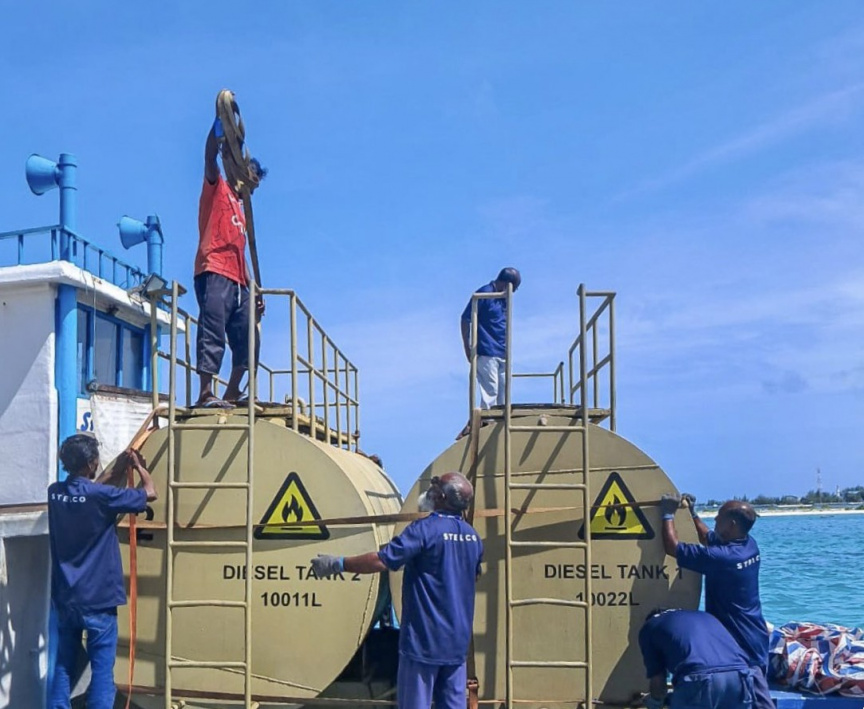
However, Zareer said international financial institutions expect oil prices to decline next year, which would reduce state spending on fuel subsidies to MVR 3.2 billion in 2027.
The MMA and several international institutions have previously recommended reforms to the Maldives' subsidy framework, arguing that the current system is financially unsustainable.
Among the measures proposed in last year's budget to reduce state expenditure was a plan to replace universal electricity and food subsidies with a targeted system focused on households that require assistance. However, President Dr Mohamed Muizzu later decided not to proceed with the reforms, saying benefits already provided to the public should not be withdrawn.