
date_range
Tuesday 03 Nov 2026


 LOCAL EDITION
close
 LOCAL EDITION



A household emergency kit laid out. (Photo/Hawai‘i Emergency Management Agency)
Governments across the world have begun issuing quiet, matter-of-fact instructions to their citizens: keep enough supplies at home to survive several days without basic services.
The advisories are not dramatic. They do not mention war, cyberattacks or geopolitical tension. But the timing, clustered around November 17, has raised questions about why so many countries are suddenly reminding households to prepare for short-term disruption.
In the United Kingdom, the government refreshed its national resilience messaging, urging families to maintain a three-day emergency kit: water, food, medicines, radios, lighting and cash. The advisory was framed as routine preparedness, yet its release coincided with similar reminders issued in the United States, Norway, Sweden and Japan. Each country used different language, but the message was the same: be ready to manage without power, internet or digital services for several days.
None of these governments explained why the reminders were issued at the same time. But global infrastructure experts have been warning for years that the world’s digital backbone, the undersea fibre-optic cables that carry almost all international internet traffic, is more fragile than most people realise. These cables have been damaged before by earthquakes, anchors and suspected sabotage. A major disruption does not require a global catastrophe; it only requires a few critical cables to fail at once.
Speculation about deliberate cable cuts, including scenarios involving Iran, has circulated online. There is no verified evidence of an imminent plan to sever specific routes. But the risk itself is real enough that governments routinely include communication loss in their preparedness messaging. If several cables in a region were disrupted simultaneously, the effects would be immediate: regional outages, slow or unstable connectivity, congested rerouting and disruption to payment systems, aviation, shipping and government services.
In such a scenario, satellite networks like Starlink could soften the blow. They cannot replace global fibre overnight, but they can restore partial connectivity for hospitals, airports, emergency services and government offices. A prolonged outage followed by satellite-based recovery would not create a dramatic “digital reset”, but it could accelerate a shift toward more distributed, satellite-supported infrastructure, changing who controls global connectivity and how nations secure it.
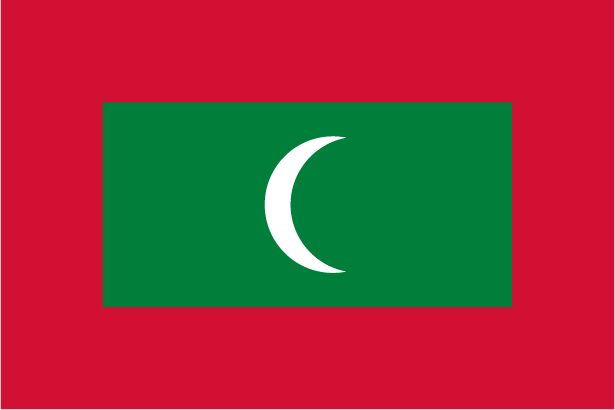
For Maldives, the implications are significant. The country’s economy, governance and daily life depend heavily on uninterrupted digital access. Tourism bookings, resort operations, banking, remittances, health records, education platforms and inter-island coordination all rely on stable connectivity.
Albeit most unlikely to affect us directly, a regional outage would not only disrupt services; it would create an information vacuum as well.
This is why global preparedness messaging matters here. Practical resilience is not alarmism. It is a recognition that even isolated small island nations can be exposed to external shocks, not just larger countries with multiple infrastructure routes or conflicts.
The November 17 advisories may not point to a single event. But they do signal a global shift in how governments think about resilience, and a reminder that Maldives should not wait for disruption to learn how to cope with it.
Being reminded of the number alliteration with the 9/11 attack and what ensued in Iraq after it, seeing the same global powers again under duress, this time with 11/17 and Iran, conspiracy theorists are having a field day scaring the general public.
Regardless of upcoming doomsday or another lockdown like the Covid years, it would not harm Maldivians to stockpile on essentials and keep plenty of cash in hand. Just in case.