date_range
Monday 19 Oct 2026


 LOCAL EDITION
close
 LOCAL EDITION


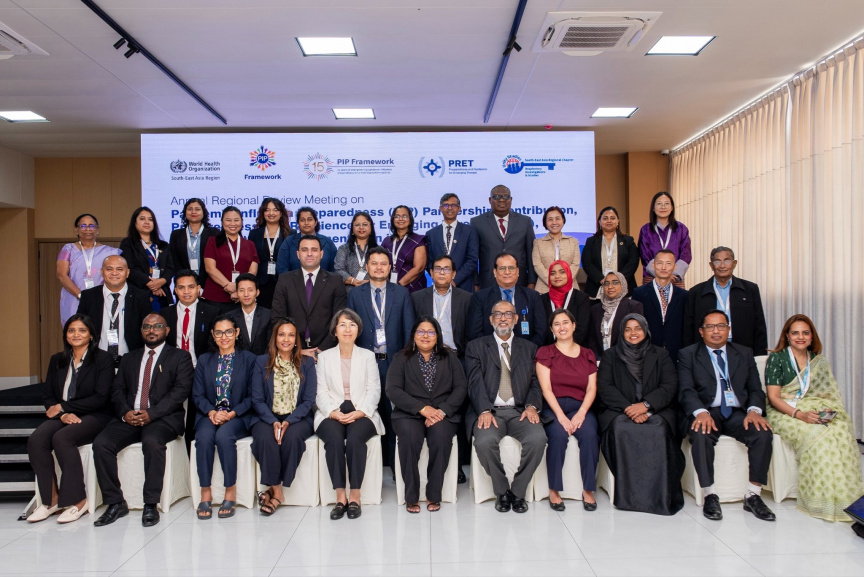
From the opening session of the WHO South-East Asia Regional Review Meeting, held in Male' City, October 18, 2026. (Photo/Ministry of Health, Family and Welfare)
The WHO South-East Asia Regional Review Meeting on Pandemic Preparedness and Health Security has begun in the Maldives, bringing together international experts to assess regional readiness for future health emergencies.
Minister of Health, Family and Welfare Geela Ali attended the opening session of the five-day meeting, which is being held in Male' from Sunday to Thursday. A total of 42 international delegates, regional health officials and technical specialists are participating.
The meeting’s core objective is to review the implementation of three major WHO frameworks: the Pandemic Influenza Preparedness (PIP) Framework, the Preparedness and Resilience for Emerging Threats (PRET) initiative, and the WHO GISRS Unity Studies, all key components of the region’s pandemic-readiness architecture.
Speaking at the opening as a national leader and a member of the Pandemic Fund Board representing WHO’s South-East Asia Region, Minister Geela underscored the urgency of multi-sectoral planning to maintain regional cohesion, strengthen health systems, and enhance surveillance to prevent and respond to potential outbreaks.
Speaking at the opening of the WHO South-East Asia Regional Review Meeting on PIP, PRET and Unity Studies in Malé, Minister @geelaali highlighted the importance of regional collaboration, strong health systems and collective preparedness to strengthen health security and resilience. @WHOMaldives #WHOSEAR
— Ministry of Health, Family and Welfare (@MoHmv) October 18, 2026
The government says hosting this high-level WHO review meeting in the Maldives, and actively contributing to its technical discussions, will bring significant benefits to the country.
Strengthening national frameworks:
Aligning Maldives’ technical work with the regional roadmap (2026–2031) will accelerate improvements in respiratory-disease recognition and related national strategies, including compliance with influenza and severe respiratory illness (SARI/ILI) guidelines.
Increased international and regional assistance:
With Minister Geela representing the Maldives on the Pandemic Fund Board, the country is positioned to ensure that the unique vulnerabilities of small island nations are prioritized in accessing international financing and technical cooperation.
Capacity building:
Collaboration with international experts, including the U.K. Health Security Agency (UKHSA) and WHO reference centres, will enhance the preparedness of Maldivian health workers, strengthen laboratory quality, and expand clinical research networks.
The five-day meeting serves as an important platform for South-East Asian member states to reinforce public-health protection measures, drawing on lessons learned from global epidemic and pandemic events.