date_range
Saturday 24 Oct 2026


 LOCAL EDITION
close
 LOCAL EDITION


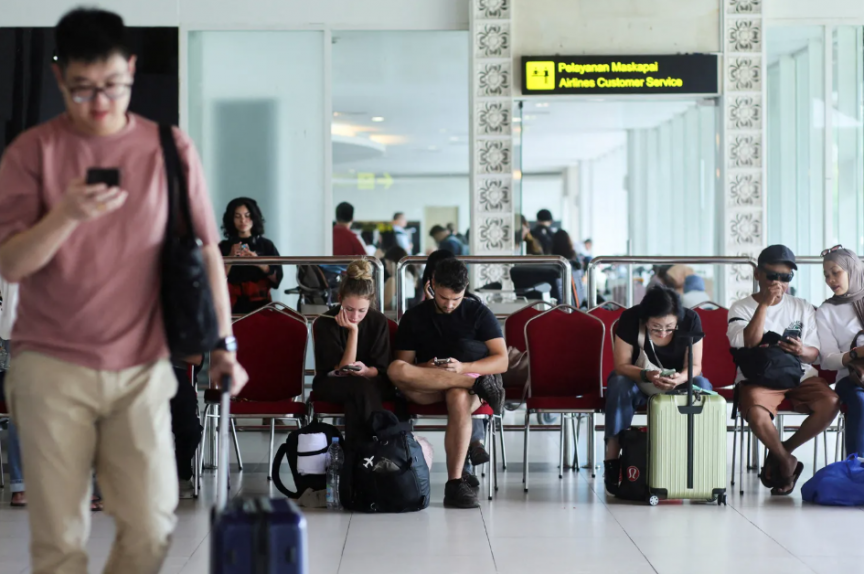
Indonesia reopens five airports after Anak Krakatau eruption. (Photo/Reuters)
Indonesia's main international airport and several other regional aviation hubs have reopened after days of enforced closures due to volcanic ash from Mount Anak Krakatau, the Transport Ministry confirmed.
The ministry stated that the primary airport serving the capital, Jakarta, alongside four others situated near the metropolis or across Java, are functioning once again as the safety crisis begins to ease.
Mount Anak Krakatau, situated roughly 150 kilometres from Jakarta, erupted on Saturday, spewing a fountain of molten lava and a massive plume of volcanic ash into regional flight paths.
Eight airports suspended flight operations over the weekend after hazardous ash clouds entered their airspace, disrupting nearly 3,000 scheduled flights and leaving upwards of 340,000 passengers stranded.
"Following the current volcanic eruption activity of Mount Anak Krakatau, Soekarno-Hatta International Airport has resumed flight operations," the capital's primary airport announced on Instagram, following repeated extensions of earlier ground stops.
Flight backlogs
Airlines now confront the logistical challenge of clearing vast passenger backlogs and rescheduling aircraft after multiple days of disruption.
The reopened facilities include Halim Perdanakusuma, a smaller Jakarta-area airport catering to civilian and military flights, alongside Hussein Sastranegara in Bandung, the provincial capital of West Java.
With a small airport in southern Sumatra resuming services on Monday morning, six of the initial eight closed hubs have resumed operations, while two remain shut.
On Monday morning alone, more than 240 domestic and international services were cancelled or delayed at Soekarno-Hatta airport, directly impacting nearly 30,000 travellers.
The Transport Ministry had earlier prepared six diversion airports for aircraft scheduled to land in the capital.
Anak Krakatau, meaning "Child of Krakatau", sits in the Sunda Strait separating Java and Sumatra.
It emerged from the sea early last century inside the caldera formed by the catastrophic 1883 eruption of Mount Krakatau.
In 2018, a partial collapse of the volcanic island triggered a deadly tsunami that killed 429 people and displaced thousands.
___
Source: TRT