date_range
Sunday 20 Sep 2026


 LOCAL EDITION
close
 LOCAL EDITION


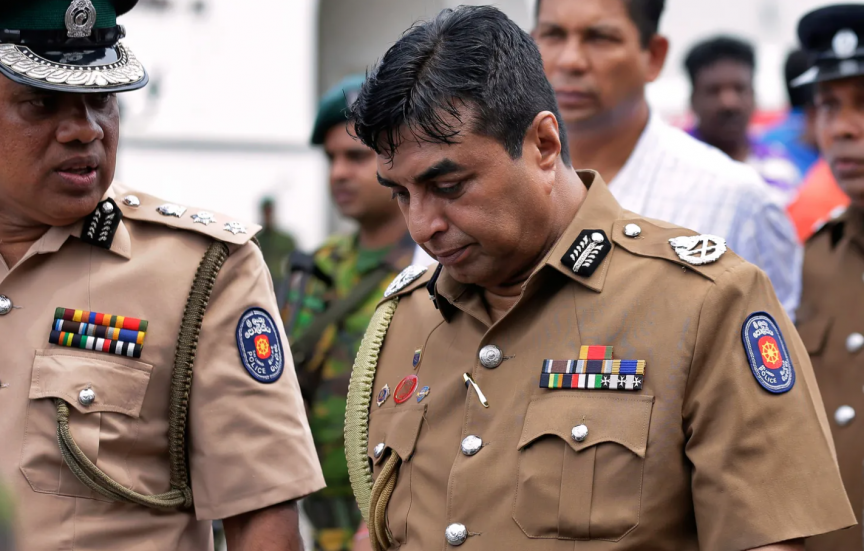
Pujith Jayasundara on the site of 2019 Easter Sunday bombings. (Photo/AP)
A Sri Lankan court sentenced two ex-security officials to death on Friday for failing to prevent the 2019 Easter Sunday bombings, which killed 279 people, including 45 foreigners.
In a majority decision, a three-judge bench ruled that former police chief Pujith Jayasundara and former defence ministry secretary Hemasiri Fernando failed in their duties to stop the deadly attacks
Friday's judgement comes months after Sri Lanka's Criminal Investigation Department arrested former intelligence chief Suresh Sallay on allegations of conspiracy and aiding and abetting the Easter Sunday bombings.
The Easter Sunday attacks on April 21 targeted three churches and three hotels, killing 279 people, including 45 foreign nationals, and wounding more than 500 others.
‘Grave crimes’
Fernando and Jayasundara were arrested in 2019 and held in custody for four months before being released on bail. Under a previous civil action, they had to pay 125 million rupees (an estimated $372,464) as damages to survivors of the attack.
Prosecutors had earlier told the high court that "negligence" by the two top officials amounted to "grave crimes against humanity" and laid murder charges against them.
Both men were eventually convicted of negligence leading to the death of 279 people.
Jayasundara and Fernando had testified to a parliamentary inquiry that then-president Maithripala Sirisena failed to follow established protocols in assessing national security threats ahead of the bombings.
Larger conspiracy
Investigators have linked the arrest to a broader probe into whether elements of the country's security establishment played a role in the attacks or failed to prevent them.
The investigation has also been shaped by allegations from a whistleblower, who claimed Sallay allowed the bombings to proceed to influence the 2019 presidential election in favour of Gotabaya Rajapaksa.
Rajapaksa announced his candidacy two days after the attacks and went on to win the November election after campaigning on national security.
Sri Lanka has not executed since 1976 despite retaining the death penalty, with death sentences typically commuted to life imprisonment.
___
Source: TRT