date_range
Saturday 19 Sep 2026


 LOCAL EDITION
close
 LOCAL EDITION


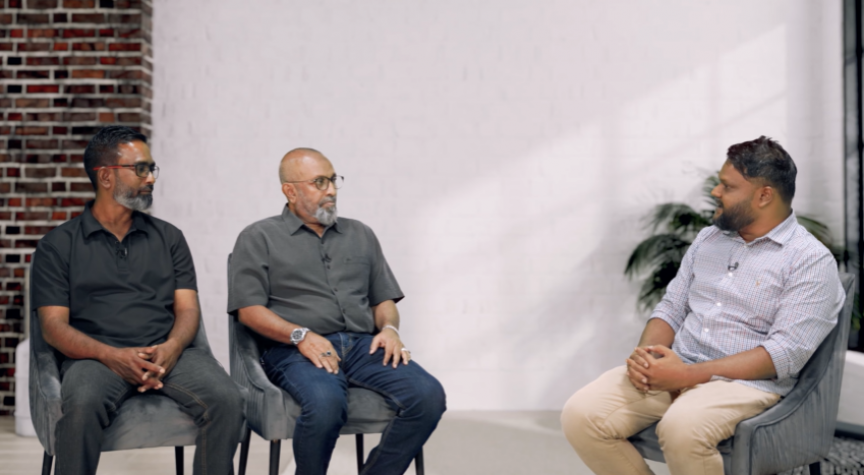
(L-R) Kulhudhuffushi cable TV operator Mohamed Ali and Ibrahim Rafeeu (Fibernet Rafeeu), a cable TV operator in Vilimale' attend an SSTV episode, sharing their concerns about foreigners taking over the broadcasting industry, April 22, 2026.
Maldivian cable TV operators have warned that they are at risk of shutting down their businesses if foreign companies are allowed to rebroadcast or provide cable TV services.
The rebroadcasting rules in Maldives have been changed several times. In 2022, an amendment by the then‑Broadcasting Commission stipulated that rebroadcasting licences could only be issued to companies that were 100 percent Maldivian‑owned. However, Parliament later ordered the amendment to be changed, and the rules now allow foreign companies to rebroadcast in Maldives.
Kulhudhuffushi cable TV operator Mohamed Ali said it was surprising that the opportunity had been opened for foreign companies to provide rebroadcasting services. He said he began providing the service in 2008 after the government assured him that foreign companies would not be allowed to enter the business.
Mohamed said revenue from cable TV services is declining further due to the growing interest in streaming services. He said that even now, upgrades and service improvements have to be financed through loans.
“The way things are now, we don’t think we can hold on either. I don’t believe we can hold on if foreign companies are allowed to offer this service,” said Mohamed Ali, operator of Kulhudhuffushi Cable TV.
Ibrahim Rafeeu (Fibernet Rafeeu), a cable TV operator in Vilimale', said giving opportunities to foreign companies is another way for dollars to leave the Maldivian economy. He noted that foreign companies would operate in rufiyaa and then take dollars abroad.
Therefore, he said, allowing foreign companies into the sector would not only harm Maldivian cable TV operators but also contribute to dollar outflow.
If Maldivian businesses suffer in this way, he said they will be left with two choices.
“We will have two choices. One is to cast aside the cost we have incurred, the networks and systems we have built. The second is for the government to help us,” said cable TV operator Ibrahim Rafeeu.
Rafeeu said he hoped the government would review the current rebroadcasting situation and provide assistance, ensuring that large foreign companies do not enter the Maldivian market.
Mohamed Ali also said he hoped the rules would be amended to state that cable TV services can only be provided by 100 percent Maldivian‑owned companies. However, he expressed concern that the Broadcasting Commission is making changes without consulting operators currently active in Maldives.
He noted that the frequent changes to rebroadcasting rules are a major concern for service providers. The solution, he said, is to protect cable TV companies through legislation.
A petition has been submitted to President Dr Mohamed Muizzu with the signatures of more than 100 businessmen working in the industry, requesting a law banning rebroadcasting services for foreigners.