date_range
Sunday 20 Sep 2026


 LOCAL EDITION
close
 LOCAL EDITION


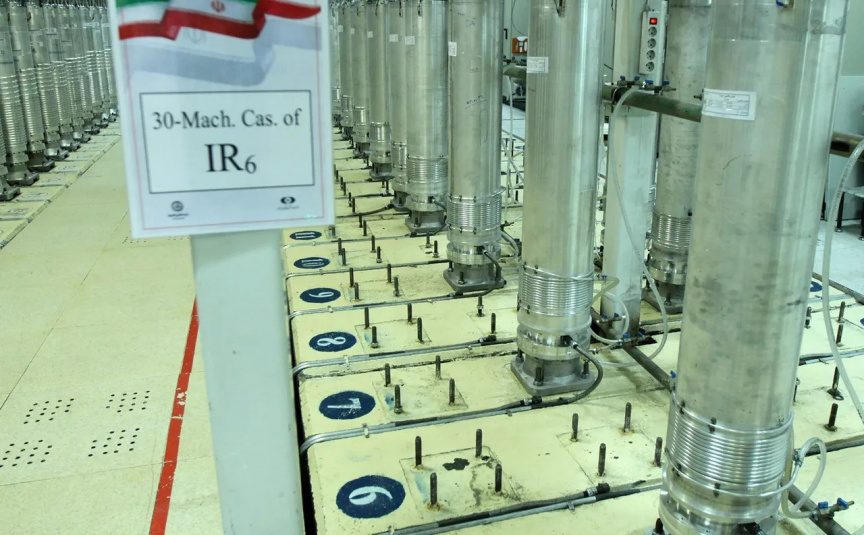
Washington is reportedly open to shortening its demand for a uranium enrichment moratorium if Tehran offers stronger assurances it will not pursue nuclear weapons, according to Pakistani officials. (Photo/AP)
The United States has conveyed a “conditional willingness” to reduce its demand for a halt to Iran’s uranium enrichment programme from 20 years to 10 years, provided Tehran gives strong guarantees that it will not seek to develop nuclear weapons, two Pakistani government sources said on Tuesday.
The proposal comes as Pakistan intensifies behind-the-scenes diplomacy to broker a second round of high-stakes talks between Washington and Tehran aimed at ending weeks of conflict across the Middle East.
According to a senior Pakistani government source familiar with the negotiations, Washington’s main objective remains a long-term suspension of Iran’s uranium enrichment activities in exchange for sanctions relief and the unfreezing of Iranian financial assets.
“Washington’s priority is still the suspension of Iran’s uranium enrichment program for at least 20 years,” the source said, speaking on condition of anonymity.
Tehran, however, has reportedly proposed a five-year moratorium.
“But Washington has shown its conditional willingness to reduce the moratorium timeframe from 20 years to 10 years if Tehran gives some strong guarantees about its nuclear weapons concerns,” the source added.
Iran has not yet formally responded to the latest US proposal.
The diplomatic push follows Pakistani army chief Gen. Asim Munir’s three-day visit to Iran last week, where he met both civilian and military leaders as Islamabad deepened its role as a mediator.
Munir, who has reportedly spoken several times with US President Donald Trump, is directly involved in efforts to bridge the gap between the two sides on the nuclear issue — the biggest obstacle to a negotiated settlement.
Pakistani sources say both Washington and Tehran continue to exchange proposals and messages through Islamabad in an effort to reach what one official described as a “maximum understanding” before formal talks resume.
The next round of negotiations is expected to take place in Islamabad.
Enriched uranium, monitoring disputesAmong other US proposals is the transfer of Iran’s enriched uranium stockpile for 10 years, preferably to the US or a third country.
Iran has publicly rejected that idea, insisting it will not hand over its enriched uranium abroad.
Russia had earlier proposed taking custody of Iran’s highly enriched uranium as part of a diplomatic solution, but Washington reportedly rejected the offer.
Iran is believed to hold more than 400 kilogrammes of enriched uranium and has suggested it could suspend some nuclear activity for up to five years, according to reports.
Pakistani sources also said Tehran has agreed in principle to Islamabad’s proposal for third-party monitoring of its nuclear program by four countries working alongside the International Atomic Energy Agency (IAEA).
Washington, however, has so far shown little interest in that mechanism.
Strait of Hormuz tensionsThe diplomacy unfolds against the backdrop of continued military and economic pressure.
Tehran has said it will not join fresh talks unless the US ends what it calls the “illegal” blockade of Iranian ports.
Washington, meanwhile, is demanding the full reopening of the Strait of Hormuz, a critical global oil route that has remained nearly shut since the US and Israel launched attacks on Iran on February 28.
Iran briefly reopened the strait on Friday before shutting it again after Trump announced the blockade would remain in place.
On Sunday, US forces detained an Iranian cargo ship after opening fire and boarding it, further escalating tensions.
Despite the sharp standoff, Pakistani officials say both sides understand that continued war would only deepen the crisis.
“Both sides acknowledge the fact that war will further complicate this already complex issue,” one source said. “That’s why we are very hopeful they will agree on some middle ground.”
___
Source: TRT