date_range
Tuesday 01 Sep 2026


 LOCAL EDITION
close
 LOCAL EDITION


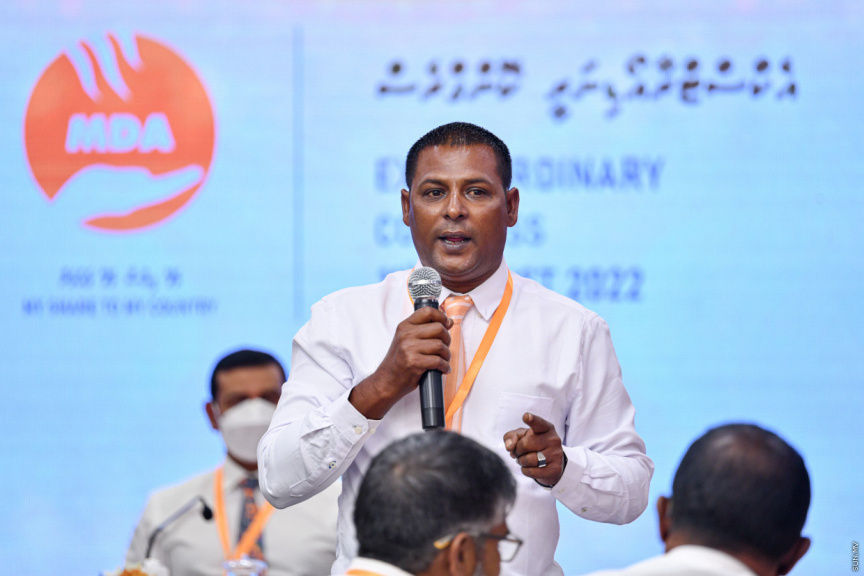
Velidhoo MP and MDA's Deputy President, Spokesperson Mohamed Abbas. (Sun Photo/Mohamed Hayyan)
Maldives Development Alliance (MDA) Vice President and Velidhoo MP Mohamed Abbas has said the members of the 20th Parliament should resign immediately, stating that the public will not be relieved unless a new parliament is elected.
Speaking on SSTV’s Baaru Hathareh programme on Wednesday evening, Abbas said the most responsible step the current Parliament could take, based on its performance over the past two years, would be for all MPs to step down.
“There is no way to relieve the people of these serious concerns unless the current parliament resigns and a new parliament is elected,” Abbas said.
Abbas criticised MPs for repeatedly referring to the “last government” during debates, saying he had not seen meaningful action on corruption cases submitted to parliamentary committees or the Anti‑Corruption Commission (ACC). He questioned what outcomes had been achieved through those submissions, describing the process as “just talk”.
He also noted that the public continues to raise allegations against the heads of several state‑owned companies, including MTCC, RDC, Fenaka, and former NSPA CEO Heena Waleed, who was recently appointed Minister of Culture.
“Where is the ACC? What is it looking at? It isn’t doing anything, is it? Where is the Auditor General? What report did he issue?” Abbas asked.

Abbas said MPs must advocate for the public, hold the government and independent institutions accountable, and push for reforms in agencies that fail to meet their responsibilities. Without this, he said, the constitutional system would not deliver its intended benefits to the people.
Parliament’s 20th session began this year with limited activity. Before the council elections, the legislature held only five sittings, on February 5, 10, 11, 17 and March 8. Parliament resumed sittings this week, holding at least three days of sessions as required under its rules.
MPs, who hold positions with high salaries and extensive state‑funded benefits, have faced public criticism over the limited number of sittings and the perceived lack of work compared to the resources allocated to the institution.