date_range
Monday 12 Oct 2026


 LOCAL EDITION
close
 LOCAL EDITION


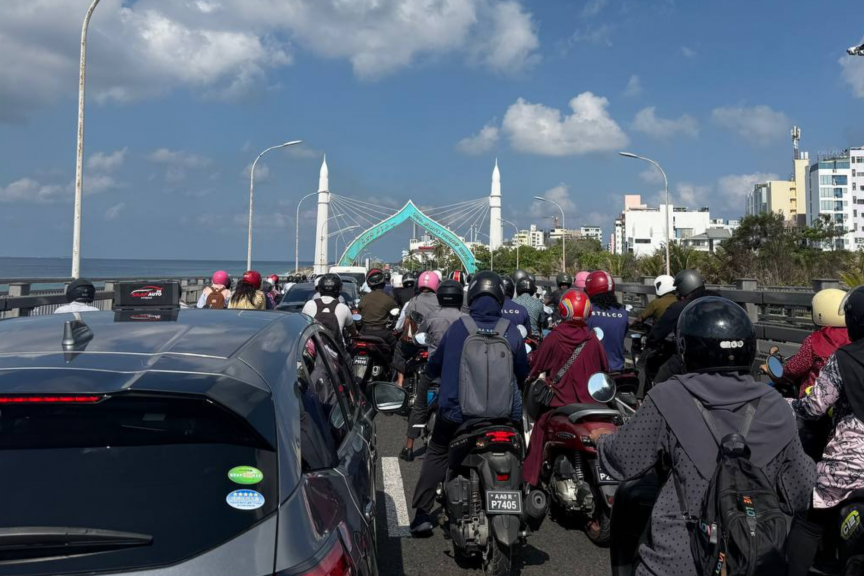
Traffic jam on the Sinamale' Bridge. (Sun Photo/Ahmed Saail Ali)
This is not a new phenomenon. However, it feels very new to me because it hasn’t even been three weeks since I moved to Hulhumalé. Every day as I commute to Malé for work, a thousand questions race through my mind. Is the sight we see on the highway and the bridge not a warning bell? As the population of Hulhumalé grows exponentially, can we really sustain this?
Every official working morning as the sun rises, I see hundreds of impatient citizens on the Sinamalé Bridge and the highway. A journey that previously took 15 minutes has now commonly stretched beyond 30 minutes. The bridge lanes are packed and congested with the motorcycles of parents taking children to school, employees rushing to their offices, cars, and buses.
While this bridge, built during President Abdulla Yameen’s tenure to provide a solution to the previous sea travel by ferry, was a massive relief at the time, we are seeing that reality change today. Due to the heavy traffic every working day, frustrations and accidents have increased drastically.

The Population is Growing; This Will No Longer Suffice
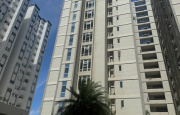
Hulhumalé, which was reclaimed to find a solution for the congestion in Malé, has today transformed into a massive, congested city in its own right. According to 2022 census statistics, between 65,000 and 70,000 people live in Hulhumalé. However, this number will have multiplied many times over by now. Even looking solely at the 16-story Hiyaa towers developed in Hulhumalé Phase II, more than 30,000 people live there now.
Furthermore, as people are currently moving into the 4,000 flats built during the previous MDP government, and with the Vinares flats and numerous private housing projects underway, the city is rapidly filling up with a massive wave of population.
Despite how large the population of Hulhumalé becomes, for many, the island remains merely a "nest" to sleep in. The main reason is that the Maldives' largest hospitals, famous schools, most government ministries, and major commercial hubs are still located in Malé. Because of this, thousands of people are forced to come to Malé every day.
The result is extreme congestion on the highway and bridge during morning office and school hours. If even a minor accident occurs during these peak times, the entire transport system comes to a standstill, and the productive time of many is lost on the road. It is certain that no relief will be found for this congestion unless the level of dependence on Malé is reduced as the population grows.

This is not a problem unique to the Maldives. Developed countries across the world experience similar issues. A perfect example is the relationship between Dubai and Sharjah in the United Arab Emirates (UAE). I experienced this vividly during a recent trip to the UAE.
Because the cost of living in Sharjah is lower and space is more abundant, many people live there and commute to Dubai for work every day. Statistics show that more than 1.3 million vehicles travel between these two cities daily. Consequently, a 20-minute journey stretches to two hours.
To solve this, the UAE government built massive roads and introduced "Salik" toll systems where higher fees are charged during peak hours. However, simply widening roads did not provide a permanent solution. Therefore, the country is now aiming to change the work environment itself.
Urgent Changes for the Bridge and Highway are Vital
Given the economic situation of the Maldives, building an additional bridge or highway in the near future is not feasible. Therefore, we must head toward modern solutions like those used in other countries. Firstly, through urban planning, Hulhumalé must be made into a place where all services are complete.
Major government ministries and large offices must be moved to Hulhumalé to eliminate the reasons for needing to come to Malé. Secondly, changing office and school hours to vary the times people go to work would reduce the simultaneous traffic pressure.

Additionally, the public transport system must be strengthened beyond its current state. The RTL bus service should be further expanded, making bus travel easier and faster than going by private motorcycle. Along with this, policies such as taking a toll from vehicles crossing the bridge during peak hours should be considered to control the volume of vehicles on the road. That is how it is done in developed countries. But that should only be done after improving public transport.
Furthermore, the role of the police is significant. Even now, police are active on the bridge and highway during peak hours. This activity needs to increase, especially to stop those driving against regulations. Because of them, innocent lives are lost, injuries occur, and time is wasted.
As Hulhumalé fills up day by day, if revolutionary changes are not brought to the transport system between Malé and Hulhumalé, this will become a major national issue in the future. The efforts of the police to simply manage the roads will not provide a permanent solution. What is needed is a policy of consolidating living environments and workplaces with long-term vision. If we do not begin implementing new traffic control policies by the time people finish moving into the 4,000 flats, the Sinamalé Bridge will become a massive parking zone for vehicles within a few months. This is a fear that enters my mind as I think of the future while commuting to the office.