date_range
Sunday 20 Sep 2026


 LOCAL EDITION
close
 LOCAL EDITION


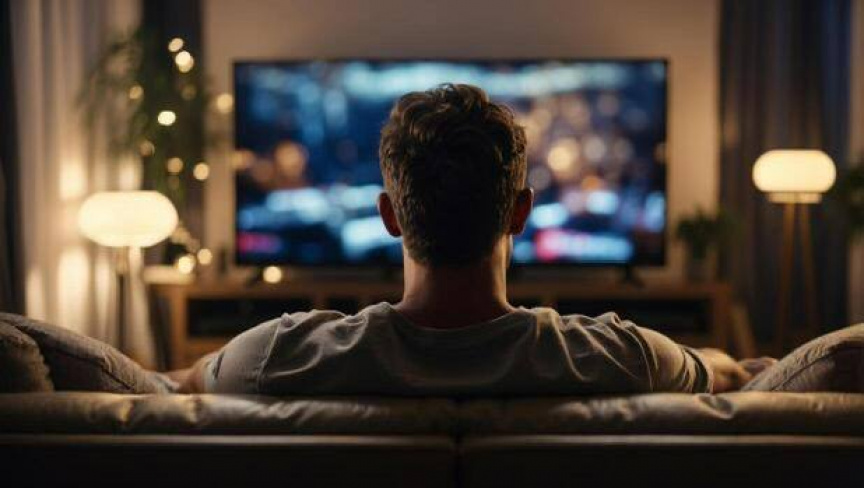
As someone who watches TV quite often and consumes high frequencies of media, Cultivation Theory fascinated me when it was first introduced to us in class. While pursuing my Master’s Degree in Communication, my classmates and I studied numerous communication theories that were as intriguing as they were riveting. One among many such is Cultivation Theory, which suggests that individuals who consume any media at high frequencies – especially television – are most likely to have their realities distorted based on the content that they are watching. They are more susceptible to believe that the content they watch on the television are accurate to how everything is in real life. When I first learned about it, Cultivation Theory was the one that piqued my personal interest. In an effort to better understand the theory’s research and findings, I spent considerable time reading about it. This encouraged me to conduct a study of my own to see whether the theory aligns with real life.
However, I recently watched a very enlightening YouTube video that, in a way, debunked the main idea this theory posits. Therefore, while Cultivation Theory initially fascinated me, further engagement with its critiques led me to reconsider how accurately it explains audience behavior today.
Cultivation Theory? Never heard of her…

Cultivation Theory argues that heavy viewers of the media – mostly TV – are more likely to see the world through media portrayals, often believing it to be more dangerous than it is, a phenomenon known as ‘Mean World Syndrome.’ More broadly, the theory argues that media reinforces existing social attitudes and norms rather than creating entirely new beliefs. The theory also points to differences in attitudes between light and heavy viewers and has been used to study topics beyond violence, such as gender roles, culture, and politics.
Under a microscope
Despite its influence, Cultivation Theory has faced substantial criticism. Scholars have argued that Gerbner’s definition of violence is inconsistent – some claiming it is too broad by including non-human acts like natural disasters, while others argue it is too narrow for focusing mainly on physical violence and ignoring psychological or structural harm. This lack of clarity weakened the consistency of the theory’s measurements.

Another major critique is the theory’s tendency to overlook other influencing factors. Critics such as Hirsch argued that personal experiences, social background, personality, and peer influence play a significant role in shaping perceptions, yet Cultivation Theory places disproportionate emphasis on television alone. Similarly, researchers highlighted that individuals respond differently to media, meaning television effects are not uniform across audiences.
Additionally, scholars questioned whether television actually caused these perceptions or whether the relationship is merely correlational. Some argued that heavy TV viewing and fearful worldviews may be linked by other variables rather than a direct causal effect. Others criticized the assumption that viewers accept televised portrayals as reality, noting that the theory does not sufficiently prove that audiences truly believe what they see on screen.
In general, while the theory remains a foundational framework for understanding long-term media effects, its limitations have encouraged more nuanced approaches that recognize audience agency, individual differences, and the influence of broader social contexts.
Are we smarter than the critics think?
Here, I will preface some of the main points that were highlighted in the video I watched. The video, titled, we’re smarter than the critics think, was published 6 months ago and suggests that “the debate about whether fiction brainwashes people” is oversimplified. Since this video itself is what encouraged me to do more research on the criticism of this theory and eventually led to changing my mind, I wish to emphasize on some of the key points that resonated with me while also expressing my personal opinions and beliefs.

Note: The opinions below are my own, informed by a video and limited research, and do not represent a widely held or global view.
The video explains that popular media can reflect dominant ideas in society, such as capitalism and patriarchy, but it does not automatically brainwash people. Many critics assume that audiences passively absorb harmful messages from films, TV shows, or books, especially women and working-class people. The speaker argues that this view is unfair and ignores the intelligence and awareness of audiences.
As a ‘communication student’ especially in the modern era, I do believe that media influences the way people think and perceive certain things. It does not exactly shape our narrative but contributes to it somehow. As a child, I watched a lot of movies and shows that instilled several fears in me. I developed a deep fear of dolls after watching the movie Child’s Play. Similarly, I used to watch many romantic movies during my teenage years that shaped the way I viewed romantic relationships. I believed I knew exactly what love was, without ever truly experiencing it – only based on my knowledge derived from such movies and books. I used to think The Notebook was romantic, but as an adult see it as an incredibly toxic relationship. I see now that love can never be clearly defined by anyone with the hopes that another will understand it exactly as it is explained, as love itself is subjective. When you are young and your brain is in its developmental stages, the things you are exposed to are engraved in your mind and your habits. You take them with you throughout your lives until you grow and reach a point where you can critically think and realize; this is actually quite insane.
The woman in the video explains that she does agree that there are certain media outlets and even writers and other sorts of creators who portray certain things in significant ways as a means of manipulation and control of the audience. Several media outlets present curated news to the public under their own personal agenda. These problems are more consistent in our time than they were before. With recent alarming movements such as the banning of books, it is understandable and rational for the public to be fearful of the media and big corporations, as these actions suggest growing control over information and narratives. They could very well be presenting what they wish to present to us in the way they wish to present them to us. They could very well be operating according to their own agenda. This agenda could potentially be aimed at “dumbing down” the public. After all, capitalism exists everywhere.
However, there are creators who create only with the intention of their talents and skills being showcased across the world. As a writer myself, most of my fictional writing is not with the intention of distorting someone’s reality but rather exploring my creative capabilities with the hope that my readers will enjoy this world I have conjured up. The speaker of the video reminds us that people know that fiction is not real. They engage with stories for comfort, escapism, and enjoyment, not as instructions to live their lives. Genres like romance are understood as fantasy, even when they include unhealthy or unrealistic relationships. Audiences are capable of separating fiction from reality while still finding meaning in stories. Popular culture is simple and familiar, which allows people to interpret it in their own way based on personal experiences. This means that meanings are not fixed or controlled by creators or corporations. Although popular media often repeats the same ideas about love, power, and success, audiences recognize these ideas do not fully match real life. And although I developed certain ideologies from reading and watching a lot of TV when I was a child – while also knowing everything I was consuming was fictional – as I grew up, I was able to distinguish between what the real world consists of and what stays within the fictional realms. That differentiation has helped me develop my own, individual narrative.
The video overall argues that people are not easily manipulated by the media. Instead, they actively interpret, question, and sometimes resist the messages they encounter. Popular culture is not just a tool of control, but a space where people create their own meanings. I do believe that older generations might, in some cases, face greater challenges in decoding media messages, mostly due to their lack of media literacy. Their realities – in my opinion – are more likely to be distorted by the content that they consume. As these generations are not too familiar with the media, they are not expected to be too literate when it comes to navigating through media. Younger generations, however, are incredibly familiar with media navigation and have better critical thinking. We like to question every piece of information provided to us and like to do research just to fact-check what is being told. Especially now, with the sudden rise of AI, we are forced to question everything that is presented to us by the media.
I think that something people completely neglect is the fact that most books – even fictional – consist of the writers’ own beliefs. Even in romance books, love is portrayed as what the writer believes love to be. We, as the audience and individual people, cannot take that on and believe that this very subjective belief of love is also what we collectively believe love to be. There is also the matter of so many books, TV shows, and movies being from the perspective of unreliable narrators. Rather than taking what is portrayed to us as facts, we are presented with the opportunity to dissect the remaining parts – the parts we are not shown – and interpret it however we want. This is precisely why we are smarter than the critics think.
High frequency consumers of media are considered victims of brainwashing, but as the video emphasizes, why do people always focus on the victims? If a victim exists, an abuser exists. Rather than questioning why young people are consuming such alarming content, it would be wiser to ask why this content exists in the first place and why it is accessible. For example, rather than questioning why someone might like a book by Colleen Hoover, we must question why Colleen Hoover’s books are the way they are, and why they are so popular.
Note: I personally am not fond of Colleen Hoover but that’s beside the point.
Perhaps it’s time we stop reducing the audience by labelling us ‘brainwashed victims’ because by doing so, we are giving power to the elite. We have freedom and control over our own minds. We are also overlooking the fact that the elite are shaped by ideology without their knowledge, as well. Their ideas and the beliefs they follow are shaped and conveyed to them by their own predecessors.
So, why does this video debunk the Cultivation Theory?
To answer this question, let’s go back to what the theory suggests. It posits that people who consume high frequencies of media – specifically television – are more susceptible to alter and shape their worldviews based on the content they watch. These individuals take what is portrayed to them on social media as “fact” and apply it to real life. Their belief is that what is portrayed in the media is how things are in the real world. What my classmates and I did not learn during our studies is the possibility of the research conducted for this theory being unreliable because firstly, it was conducted in the 1960s and 1970s, which was ages ago and secondly, on a very limited number of people.

Times have changed and so have people.
Rather than completely dismantling the theory, the video exposes its limitations in accounting for audience agency and contemporary media practices. I personally believe that the theory is still accurate to some extent – in the sense that there are certain people whose beliefs and worldviews may be cultivated according to the content they consume through media – but I also do believe it depends on how much a person consumes. I do admit to consuming a lot of media for entertainment and also to stay informed, but I also ensure to socialize and keep up with what is happening in the real world. My friends and I have enlightening discussions about serious topics that are worth talking about. There are people who will not do as such and might be more susceptible to having their worldviews cultivated by the media.
A friend told me while discussing this topic, “I am painfully aware that there are many people with so many different views than what I see on social media. I am aware that what I consume is mostly curated for me and many do not see the world similarly, because our algorithms and interests are very different.”
Ultimately, while Cultivation Theory offers valuable insight into long-term media exposure, it underestimates the interpretive power of audiences in today’s media-saturated world.
What do you think? Are we brainwashed victims of the media? Or are we smarter than that?